Visiting the Smoky Mountains in Winter: What to Expect in January and February
Winter is the most underrated season in the Smokies. The leaves are gone, so you can see the ridgelines through the trees, the roads are quieter, and a cold morning in Cades Cove can feel like you have the whole valley. Our family cabin in Wears Valley, on the quiet side of the Smokies, is about 10 minutes from the park entrance near Townsend, so winter in the park is right outside our door.
Winter also brings the same questions again and again in Smokies Facebook groups: Is Cades Cove open? Will the roads be icy? Are the bears asleep? Every closure, road, weather and bear fact below comes from the National Park Service or another official source, and the sources are listed at the bottom. Conditions change quickly in winter, so always check the park’s alerts on the day you go.
Why January and February are the Smokies’ best-kept secret
January and February are the slow season in the Smokies, and for us that’s the best part. There are no crowds and no lines, and you move at your own pace. After the New Year’s rush, the park and the towns quiet down.
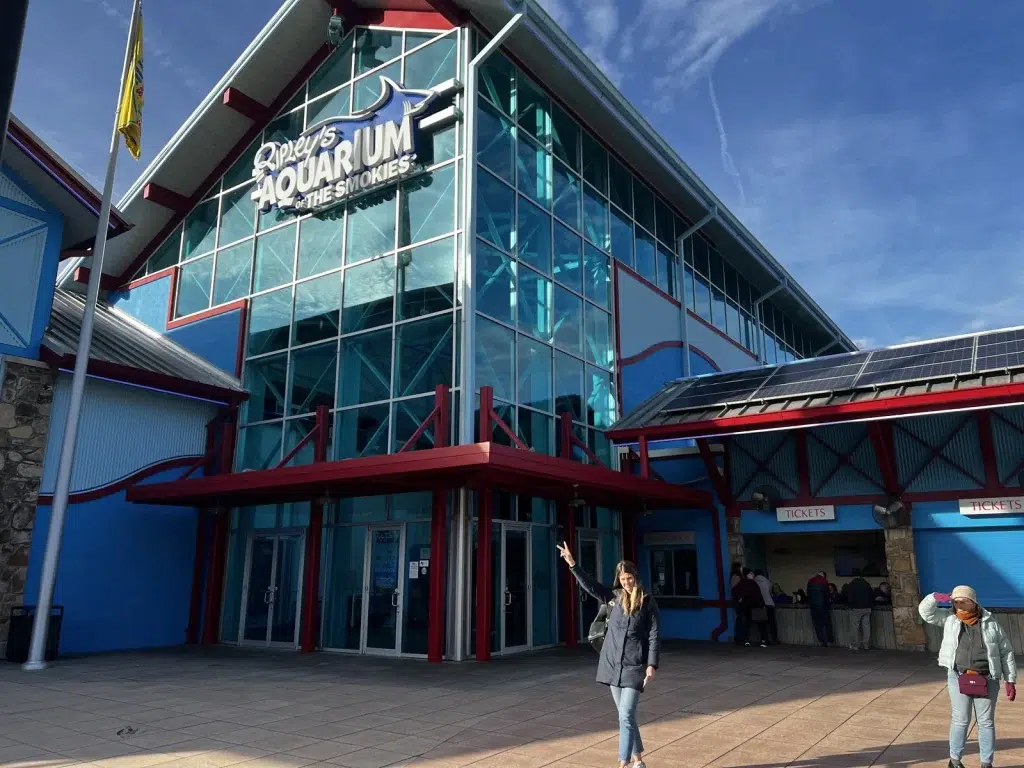
We saw that ourselves when our family visited in early January. We went to Ripley’s Aquarium of the Smokies in Gatlinburg, and there were no crowds, so we took our time and moved at our own pace.


We also hiked to Abrams Falls, strolled through Gatlinburg and The Village Shops, and ate at the Local Goat, where we got right in without a reservation. In busier seasons you often need one.
Is January a good time to visit the Smoky Mountains?
Yes. When our family visited in early January, there were no crowds and we moved at our own pace. January and February are the Smokies’ slow season. Expect cold nights, averaging 28°F in Gatlinburg, and a few seasonal closures, like Kuwohi Road. In return, you get no crowds, no lines and the freedom to move at your own pace.
The trade-offs are the weather and a few seasonal closures, which the rest of this guide covers. Pack for cold mornings, check road status, and the slow season is yours to enjoy.
Is Gatlinburg crowded in winter?
Not in early January. When our family visited, there were no crowds, and we went through Ripley’s Aquarium of the Smokies at our own pace. Holiday weeks are a different story, because the Winter Magic lights and holiday events draw visitors from Thanksgiving through New Year’s. January and February are the quietest weeks of the year in Gatlinburg.
To skip parking downtown on busier days, see where to park in Gatlinburg below.
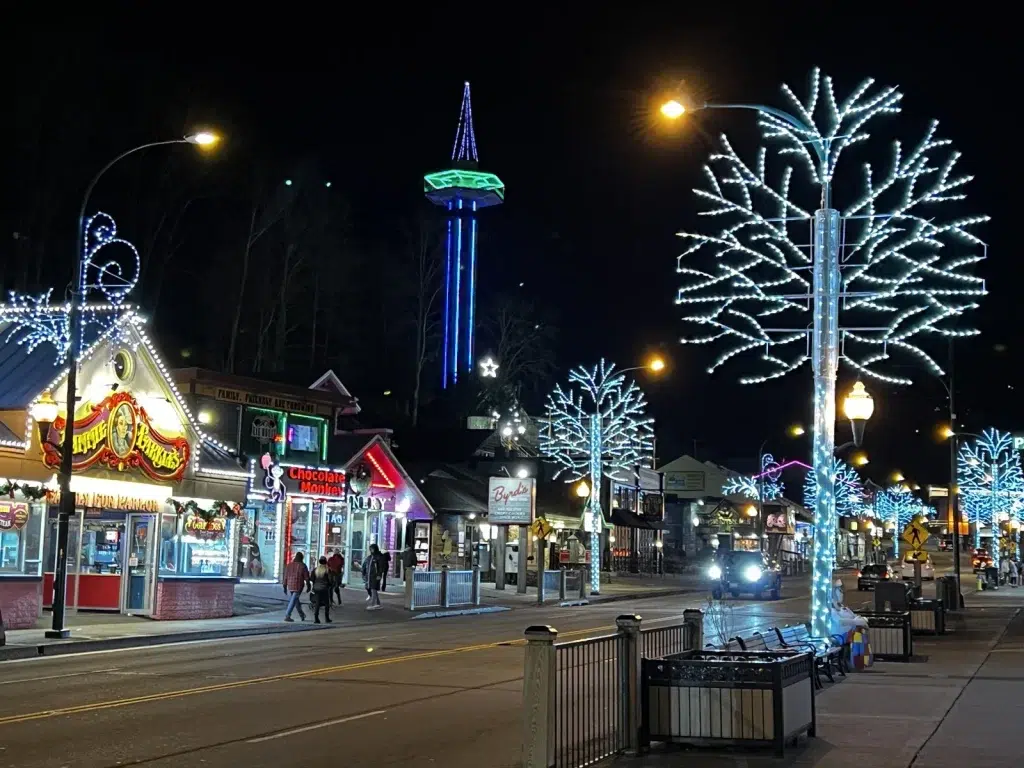
We went to Dollywood on the last day of the season. It sprinkled a little during part of the day, and because of that we rode some of the big thrill rides several times with no wait. We’d finish a ride, then walk right back around to get on the roller coaster again.
Smoky Mountains winter at a glance
- Park: open 24 hours a day, 365 days a year. No entrance fee, but you need a parking tag to park for more than 15 minutes.
- Cades Cove Loop Road: open sunrise to sunset every day, weather permitting.
- Seasonal road closures: Kuwohi Road (formerly Clingmans Dome Road), Roaring Fork Motor Nature Trail and Little Greenbrier Road close after November 29. Rich Mountain Road and Parson Branch Road close after November 9. Forge Creek Road closes after December 31.
- Weather (Gatlinburg, low elevation): average highs of 51°F to 54°F and lows of 28°F to 29°F in January and February.
- Bears: fewer sightings, but Smokies bears can wake up and move around all winter.
- Visitor centers: open year-round except Christmas Day.
- Crowds: busy for the holidays, then January and February are the slow season.
- Cell service: very limited in the park. Download maps before you go.
Is the park open in winter?
Yes. Great Smoky Mountains National Park is open 24 hours a day, 365 days a year, and there is no entrance fee. In winter, some secondary roads, campgrounds, picnic areas and historic sites close for the season. Visitor centers stay open year-round except Christmas Day. You still need a parking tag to park longer than 15 minutes.
Here is what changes in winter, according to the Park Service:
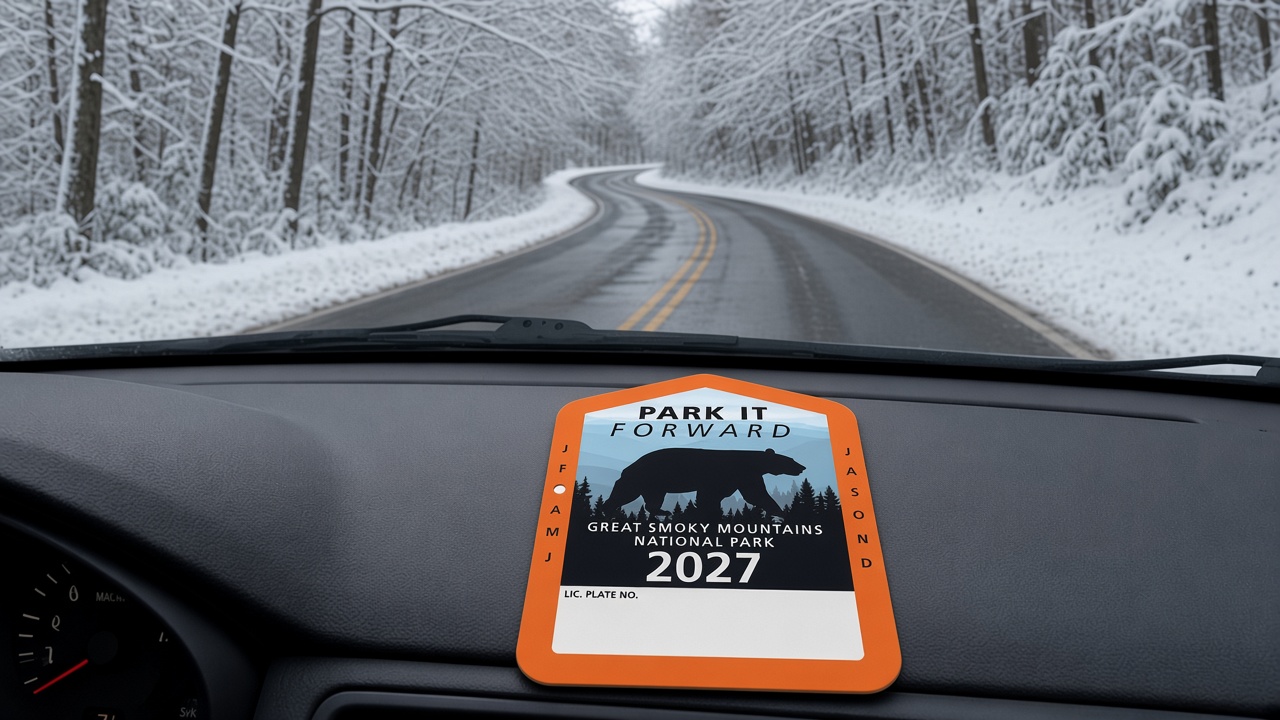
- Parking tags still apply. Daily tags are $5, weekly tags are $15 and annual tags are $40. They’re required for any vehicle parked longer than 15 minutes, anywhere in the park. Tags are tied to your license plate, and you have to display a physical tag on the lower passenger side of your dashboard. A phone screenshot doesn’t count. You can buy them at visitor centers, at kiosks or on recreation.gov. Just driving through doesn’t require a tag.
- Picnic areas: Cades Cove, Deep Creek, Greenbrier and Metcalf Bottoms stay open year-round. The others close for the winter.
- Campgrounds: Cades Cove and Smokemont campgrounds stay open year-round. The park’s other campgrounds close seasonally.
- Laurel Falls Trail is closed for rehabilitation work, and the park expects to reopen it sometime in 2027. Plan a different waterfall.
Check the park’s current closures page before you head out. It’s updated as conditions change.
Is Cades Cove open in winter?
Yes. Cades Cove Loop Road stays open year-round, sunrise to sunset every day, weather permitting. The vehicle-free Wednesdays only run from about May through September, so in winter you can drive the loop any day of the week. The park can close it during snow or ice storms, so check road status before you go.
Winter is one of the best times to drive the loop. Traffic is heaviest in summer, fall and on weekends year-round, so a weekday in January is about as quiet as Cades Cove gets. Allow two to four hours for the 11-mile one-way loop.
A few winter differences to plan for:
- Cable Mill is closed. The working gristmill near the middle of the loop runs from March 15 to November 29, so you won’t see milling demonstrations in winter. The historic churches, cabins and barns are still there to walk around.
- Storm closures. During a January 2026 winter storm, the park closed Cades Cove Loop Road, Laurel Creek Road and Little River Road along with Newfound Gap Road. When there’s snow or ice in the forecast, check before you drive over.
- The picnic area is open. The Cades Cove Picnic Area is one of four that stay open all year, which makes it a good spot for a packed lunch.
What should I put in my GPS for Cades Cove?
The Park Service warns that car navigation systems and phone apps can be wrong in the mountains. They can send you the wrong way on one-way roads or to dead ends. The simplest way to get there is to drive to Townsend, continue straight on TN-73 into the park, and follow the park signs to Cades Cove. Pick up a free park map at a visitor center, or download the park in the free NPS app before you lose signal.
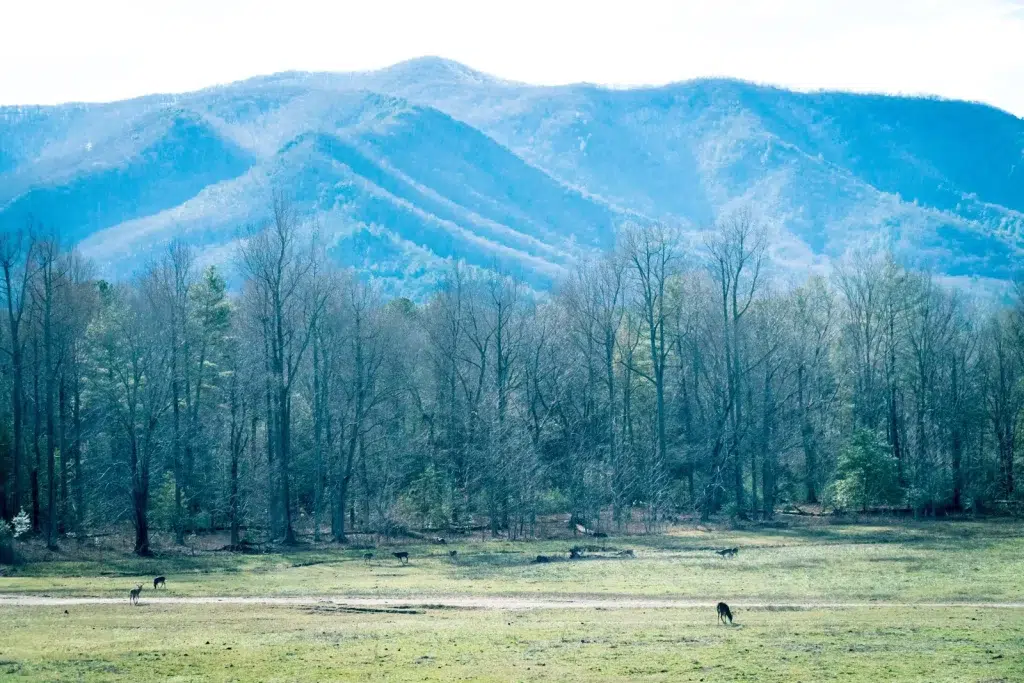
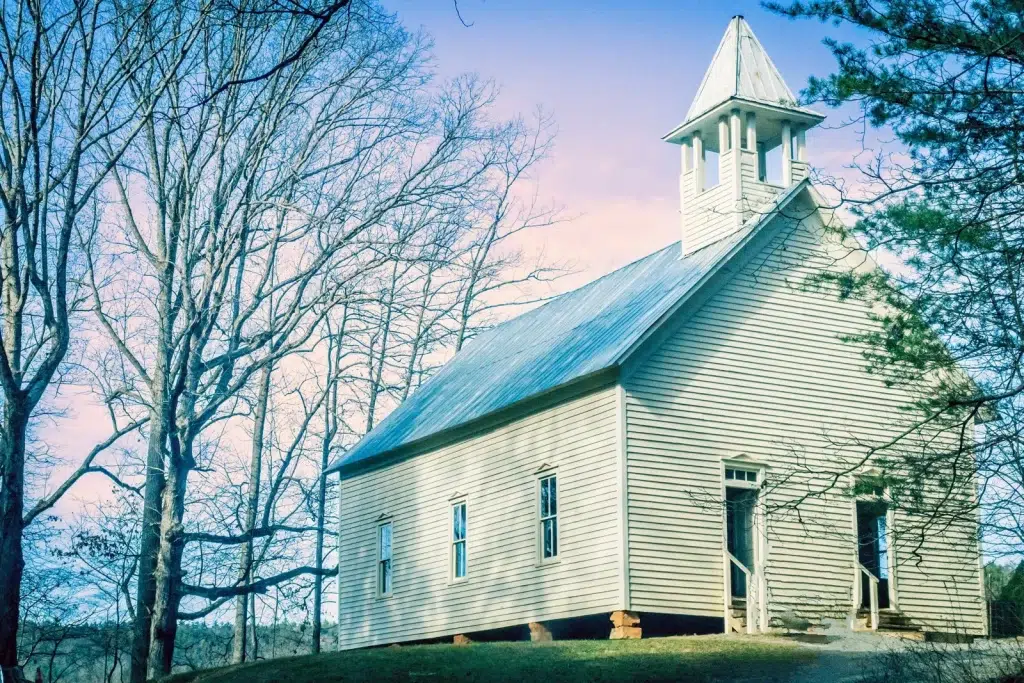
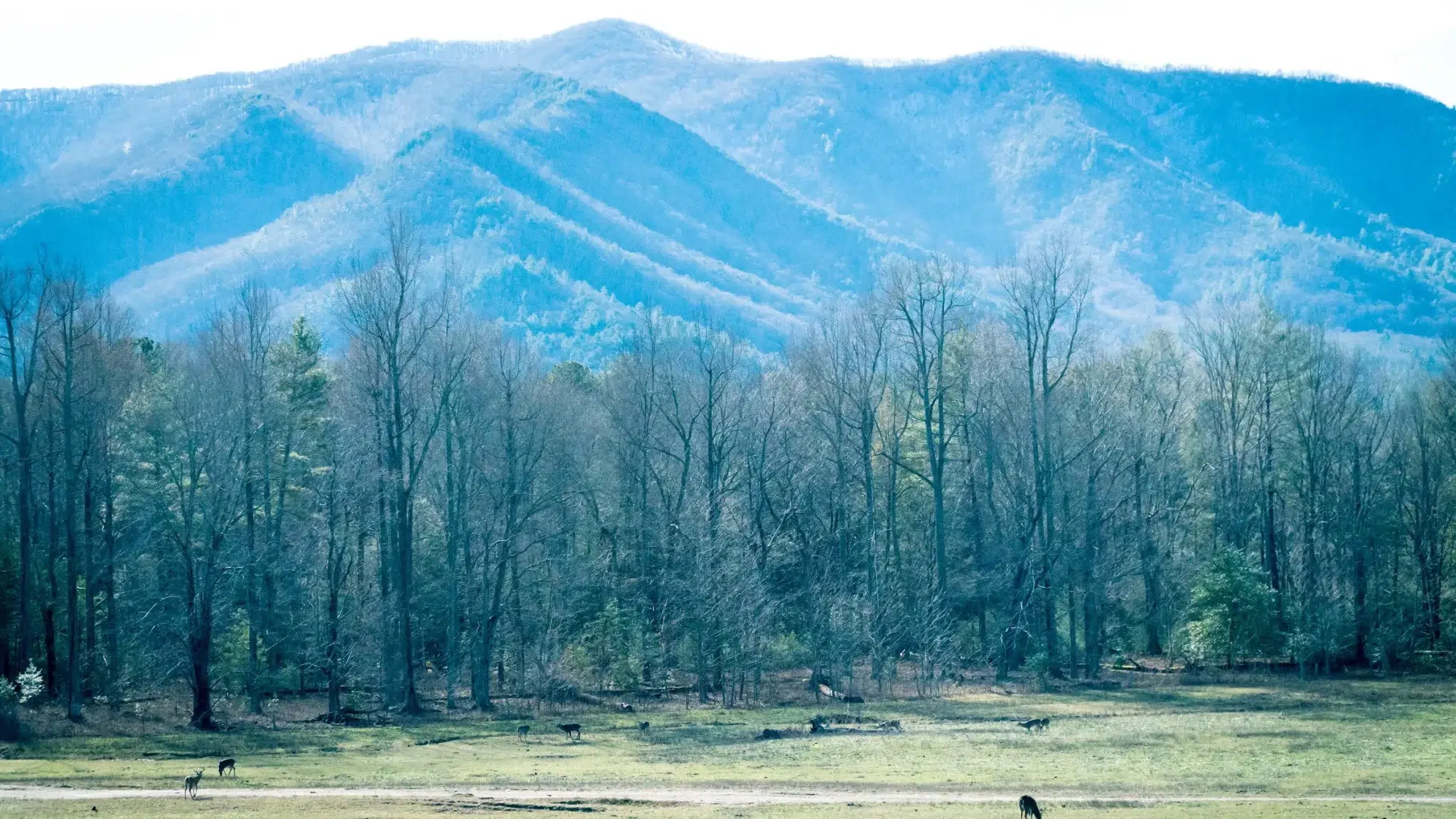
Yes. Those Cades Cove photos are from our early January trip. I’ve heard reports of traffic on the loop, but when we were there we went at our own pace and there were hardly any cars around.
For stop-by-stop detail, see our Cades Cove scenic loop guide, and queue up our free Cades Cove driving tour audio guide before you go so it plays without a signal.
Do the roads close?
Some do. Kuwohi Road (formerly Clingmans Dome Road) and Roaring Fork Motor Nature Trail close for the season after November 29 and reopen in spring. Main roads like Newfound Gap Road (US 441), Little River Road and Cades Cove Loop Road stay open year-round, but the park closes them during snow and ice.
Here’s the 2026 seasonal road schedule from the Park Service:
- Kuwohi Road (formerly Clingmans Dome Road): open April 1 to November 29. It’s closed through the winter and can close earlier for snow and ice.
- Roaring Fork Motor Nature Trail: open April 17 to November 29.
- Little Greenbrier Road: open April 3 to November 29.
- Rich Mountain Road and Parson Branch Road: close after November 9.
- Forge Creek Road: open March 6 to December 31.
- Open year-round, weather permitting: Newfound Gap Road (US 441), Little River Road, Cades Cove Loop Road, Upper Tremont Road, Wear Cove Road and Cataloochee Road.
The park hasn’t posted its 2027 opening dates yet, so treat the spring dates as this year’s schedule.
Does Newfound Gap Road close for snow?
Yes, it can. Newfound Gap Road (US 441) crosses the mountains between Gatlinburg and Cherokee, and it’s the main road the park closes when snow and ice hit the high elevations. The Park Service notes that roads can be dangerous up high even when it looks fine in Gatlinburg or Cherokee, because of steep grades and sharp curves.
To check road status:
- Text follow smokiesroadsnps to 40404 for road updates on Newfound Gap Road, Little River Road, Laurel Creek Road and Cades Cove Loop Road.
- Call the park’s information line at (865) 436-1200 and follow the prompts.
- Check nps.gov/grsm closures and alerts or the park’s X account, @GreatSmokyNPS.
The park’s winter driving advice: slow down, avoid sudden braking, leave extra space between cars, and use lower gears or brake gently on the way down.
Are the mountain roads to cabins icy in January?
Usually not, but it can happen. The Park Service says low elevations get 1 inch or more of snow only 1 to 5 times a year. January is the coldest month, and Gatlinburg averages about 2.3 inches of snow. Snow and ice are much more common up high. If you’re driving to a cabin, ask your host about the road and the driveway. At our cabin, the mountain roads up from Wears Valley Road are paved and the driveway is gravel.
What’s the weather like in January?
January is the coldest month. In Gatlinburg, at low elevation, the average high is 51°F and the average low is 28°F, with about 2.3 inches of snow for the month. Up high at Kuwohi (formerly Clingmans Dome), the average is 35°F to 19°F, with about 18 inches of snow. Mild, sunny days happen too.
Here are the Park Service’s monthly averages for the winter months. Temperatures are in °F, and precipitation and snowfall are in inches.
| Month | Gatlinburg high / low | Gatlinburg snow | Kuwohi high / low | Kuwohi snow |
|---|---|---|---|---|
| January | 51 / 28 | 2.3″ | 35 / 19 | 18″ |
| February | 54 / 29 | 2.9″ | 35 / 18 | 20″ |
A few things that surprise first-time winter visitors:
- About half of winter days reach 50°F or warmer, and highs occasionally hit the 70s.
- Most nights drop to freezing or below.
- Temperatures can be 10 to 20 degrees colder at the top of the mountains than at the base, and lows of -20°F are possible up high.
- Snow in the mountains is most likely in January and February, and up to two feet can fall at high elevations in a single storm.
Pack layers, a warm hat and gloves, and waterproof shoes. For a month-by-month look at what’s going on in town, see our month-by-month Smoky Mountains guide.
Are bears out in winter?
Some are. The Park Service says black bears usually settle into dens between late October and mid-December, but Smokies bears don’t truly hibernate. They may sleep only a month or two before waking, and they can leave their dens in warm spells. You’ll see far fewer bears in winter, but it’s still bear country.
Where is the best place to look for bears in January?
Honestly, January isn’t the best month for bear sightings, and nobody can promise you one. Most bears have settled into dens by then. If you want to try, open valleys like Cades Cove give you the widest views, and the park points visitors there for wildlife viewing. Early morning and late afternoon tend to be best.
If you do see a bear, the rules are the same in winter:
- It’s illegal to willfully approach within 50 yards (150 feet) of a bear, or any distance that disturbs it.
- If a bear changes what it’s doing because of you, you’re too close. Back away slowly and never run.
- Report bears acting unusually, or bears in picnic areas or campgrounds, to the park at (865) 436-1230. For emergencies, call 911.
We did see deer and other wildlife in the Cades Cove valley. I’ve never seen a bear at the cabin myself, but my parents have (when I was out), and nearly once every week or two we have friendly neighborhood bears stroll through looking for food.
Fun fact from the Park Service: Smokies bear cubs are usually born in late January or early February, while their mothers are still in the den.
How do I pack lunch and keep food in the car around bears?
Keep your food with you or locked in your car, and never leave food or trash out. The Park Service says bears can open car doors, so lock your vehicle. Put trash in bear-proof containers or take it with you. Feeding wildlife, littering and improper food storage can bring fines of up to $5,000 and up to six months in jail.
For a winter picnic in the park:
- Use one of the four picnic areas open year-round: Cades Cove, Deep Creek, Greenbrier or Metcalf Bottoms.
- Pack lunch in a cooler that stays in the closed, locked car until you’re ready to eat.
- Don’t leave the cooler or snacks sitting out while you walk around. Park volunteers remove unattended food and coolers.
- Take wrappers, apple cores and crumbs with you, or use the bear-proof bins.
What about fudge and other treats from shopping in town? The park’s rules only apply inside the park, and I couldn’t find an official city rule about leaving food in parked cars. My advice: keep treats out of sight, lock the car, and bring them inside when you get back. At our cabin, trash goes in the bear-proof container next to the driveway.
Which hikes are safe when it’s icy?
Stick to low-elevation, wide, gentle trails such as the Gatlinburg Trail from Sugarlands Visitor Center or the first 2.7 miles of the Little River Trail in Elkmont. High-elevation trails like Alum Cave to Mount LeConte are often icy in winter, and the Park Service recommends microspikes or other traction devices. Always be ready to turn back.
Some good low-elevation options from the Park Service:
- Gatlinburg Trail: about 4 miles round trip along the river from Sugarlands Visitor Center to River Road in Gatlinburg. It’s wide and mostly flat, with a couple of steeper sections. It’s also one of only two park trails where leashed dogs are allowed.
- Little River Trail (Elkmont): the first 2.7 miles, to the Huskey Gap Trail junction, are wide and fairly flat with minimal elevation gain. You’ll pass old stone chimneys from the Daisytown community. Turn around at the junction for an easy out-and-back.
Winter hiking tips from the Park Service:
- Bring over-the-shoe traction devices. A short, unexpected stretch of ice is enough to make you glad you have them.
- Wear waterproof boots, dress in layers and skip cotton, which stays cold when wet.
- Pack a headlamp. Winter days are short, and your phone doesn’t count as a light.
- Don’t count on your phone. Cell service is extremely limited, so carry a map and tell someone your plan.
- Be ready to turn around if the trail or weather changes.
I’ve personally only done the Abrams Falls hike in winter, and it was easy and fun with the kids. We got to explore along the trail and have fun in the creek.
Check the park’s trail closures and bear warnings before any hike. For more trail ideas, see our best nature hikes in the Smoky Mountains. One update to that list: Laurel Falls is closed until sometime in 2027.
Is it safe to hike Mount LeConte in winter?
Only if you’re experienced and properly equipped. The Park Service says to expect ice and falling icicles on the Alum Cave Trail in cold weather, and recommends microspikes in winter. LeConte Lodge warns that temperatures on top can be 15 to 20 degrees or more colder than the valley, and that temperatures in the teens, high winds, snow and ice are not unusual in spring and late fall. It recommends hiking boots, not sneakers, plus ice traction such as microspikes.
If you’re hiking with kids, plan LeConte for the warmer months and choose a low-elevation trail in winter. LeConte Lodge’s 2026 season ended on November 24, so there’s no overnight stay on top until spring. Read our guide to staying at LeConte Lodge if you’re planning ahead.
When do the holiday crowds end?
Locals, including me, call Christmas through New Year’s “hell week” for the crowds. If that’s when you’re coming, see our Christmas in the Smokies guide and our Dollywood Smoky Mountain Christmas plan. After New Year’s, January and February are the slow season, and that’s when we found no crowds at all.
Will my phone work in the park?
Often it won’t. The Park Service says cell coverage inside the park is very limited. Before you leave, download the park in the free NPS app and save offline maps, or grab a free paper map at a visitor center. Download our Cades Cove audio guide ahead of time too. Make sure someone knows where you’re going and when you’ll be back.
Where can I park once and walk around Gatlinburg?
The easiest way to skip downtown parking is the free Gatlinburg Trolley. It runs 365 days a year, and you can park at the Park-n-Ride lot at the Gatlinburg Welcome Center, 1011 Banner Road, and ride into downtown in a few minutes. The winter schedule, from November 1 to April 30, is 10:30 a.m. to 10 p.m. Hours can vary by route and during special events.
If you’d rather drive into downtown, the City of Gatlinburg parking page has the city’s current garage and lot information, including rates.
What else is there to do in the Smokies in winter?
Plenty. January and February are quiet in the park and easy in town. A few ways to fill a winter trip:
- Lights through January: Christmas lights and decorations usually stay up around the towns through January, and Pigeon Forge’s Winterfest lights run through January 31.
- Dollywood: Dollywood’s Christmas season runs through the last weekend in January, with the park reopening in March.
- New Year’s: if your trip starts right at the turn of the year, see New Year’s Eve in Pigeon Forge.
- Slow days close to the cabin: things to do in Wears Valley.
- Ideas for every month: month by month in the Smoky Mountains.
Where should I stay for a winter trip to the Smokies?
For a winter trip, I’d stay close to the park and away from the busiest traffic. Our family cabin in Wears Valley, on the quiet side of the Smokies, is about 10 minutes from the park entrance near Townsend and about 45 minutes from the start of the Cades Cove Loop. Pigeon Forge is about 25 minutes away, and Gatlinburg is about 36.
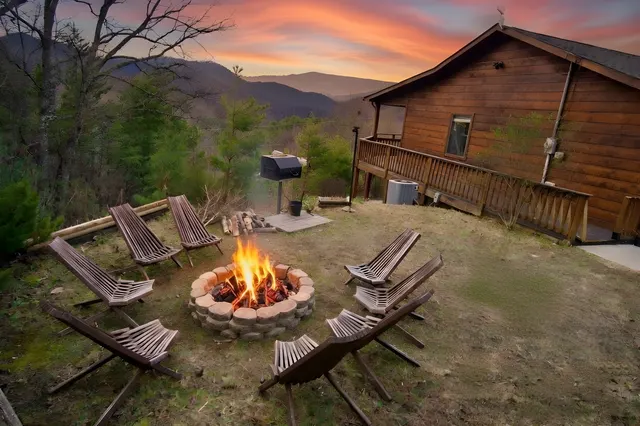
We loved jumping into the hot tub after a long day out. We also always enjoy playing pool or ping pong together. If it’s warm enough outside, we’ll cozy up around the fire pit, especially if it’s early enough to watch the sunset along the Smoky Mountains ridgeline.
After a cold day on the trail, here’s how we warm up at the cabin:
- The 7-person hot tub on the covered lower patio.
- The stone fire pit with mountain views and 8 chairs. We don’t stock firewood, so pick up a bundle on the way, like at the Ace Hardware in Townsend.
- The charcoal grill for dinner, and a newly remodeled full kitchen for hot cocoa.
- Stone fireplaces and exposed beams inside, with mountain views from every bedroom.
- A washer and dryer for wet gloves and muddy hiking clothes.
- The 900 sq ft game room for a sleet day, with a pool table, ping pong, foosball and 3 retro arcades.
- The cabin sleeps 10, with 3 bedrooms and 3 baths.
Our guests rate the cabin 4.9 across Airbnb and Vrbo. You can check winter dates and book direct on our booking page.
Smoky Mountains winter FAQ
Is January a good time to visit the Smoky Mountains?
Yes. When our family visited in early January, there were no crowds and we moved at our own pace. January and February are the Smokies’ slow season. Expect cold nights, averaging 28°F in Gatlinburg, and a few seasonal closures, like Kuwohi Road. In return, you get no crowds, no lines and the freedom to move at your own pace.
Is Gatlinburg crowded in winter?
Not in early January. When our family visited, there were no crowds, and we went through Ripley’s Aquarium of the Smokies at our own pace. Holiday weeks are a different story, because the Winter Magic lights and holiday events draw visitors from Thanksgiving through New Year’s. January and February are the quietest weeks of the year in Gatlinburg.
Is Cades Cove open in winter?
Yes. Cades Cove Loop Road stays open year-round, sunrise to sunset every day, weather permitting. The vehicle-free Wednesdays only run from about May through September, so in winter you can drive the loop any day of the week. The park can close it during snow or ice storms, so check road status before you go.
Is the park open in winter?
Yes. Great Smoky Mountains National Park is open 24 hours a day, 365 days a year, and there is no entrance fee. In winter, some secondary roads, campgrounds, picnic areas and historic sites close for the season. Visitor centers stay open year-round except Christmas Day. You still need a parking tag to park longer than 15 minutes.
What’s the weather like in January?
January is the coldest month. In Gatlinburg, at low elevation, the average high is 51°F and the average low is 28°F, with about 2.3 inches of snow for the month. Up high at Kuwohi (formerly Clingmans Dome), the average is 35°F to 19°F, with about 18 inches of snow. Mild, sunny days happen too.
Are bears out in winter?
Some are. The Park Service says black bears usually settle into dens between late October and mid-December, but Smokies bears don’t truly hibernate. They may sleep only a month or two before waking, and they can leave their dens in warm spells. You’ll see far fewer bears in winter, but it’s still bear country.
Which hikes are safe when it’s icy?
Stick to low-elevation, wide, gentle trails such as the Gatlinburg Trail from Sugarlands Visitor Center or the first 2.7 miles of the Little River Trail in Elkmont. High-elevation trails like Alum Cave to Mount LeConte are often icy in winter, and the Park Service recommends microspikes or other traction devices. Always be ready to turn back.
Do the roads close?
Some do. Kuwohi Road (formerly Clingmans Dome Road) and Roaring Fork Motor Nature Trail close for the season after November 29 and reopen in spring. Main roads like Newfound Gap Road (US 441), Little River Road and Cades Cove Loop Road stay open year-round, but the park closes them during snow and ice.
Sources
- NPS: Seasonal Road Schedule
- NPS: Current Road, Facility, Trail and Backcountry Closures
- NPS: Current Conditions
- NPS: Operating Hours and Seasons
- NPS: Cades Cove
- NPS: Visitor Centers and Historic Gristmills
- NPS: Picnic Areas
- NPS: Weather and monthly averages
- NPS: Fees and Passes (Park It Forward parking tags)
- NPS: Black Bears
- NPS: Hiking Safety
- NPS: Winter Hiking Tips
- NPS: Mount Le Conte via Alum Cave Trail
- NPS: Gatlinburg Trail
- NPS: Little River Trail
- NPS: Directions (GPS warning)
- NPS: Maps
- NPS: Road status by text
- NPS news release: Park prepares for winter storm (Jan. 23, 2026)
- LeConte Lodge: Trail and Weather Info
- Gatlinburg CVB: Free Gatlinburg Trolley (also confirms Ripley’s Aquarium of the Smokies is in Gatlinburg)
- City of Gatlinburg: Parking
Last updated: November 2026. Road dates, closures and fees are current as of publication. Always confirm with nps.gov/grsm before your visit.