Cades Cove is the undisputed crown jewel of the Great Smoky Mountains National Park, drawing over two million visitors every single year. Nestled in a picturesque 6,800-acre valley surrounded by towering peaks, this area offers a stunning glimpse into an Appalachian world that feels completely frozen in time.
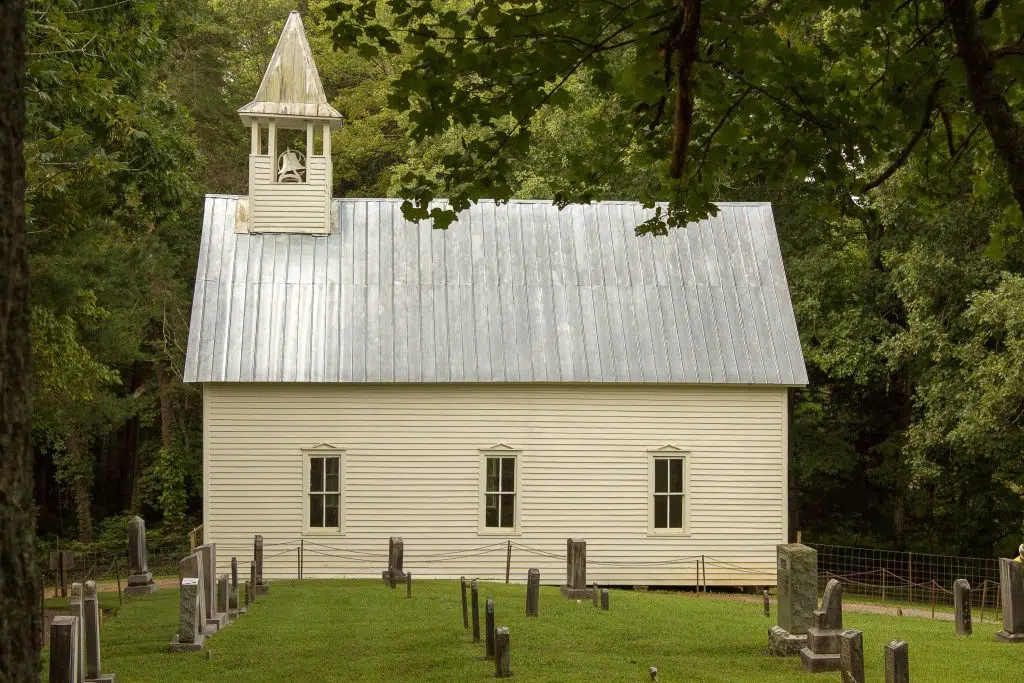
Cades Cove Methodist Church
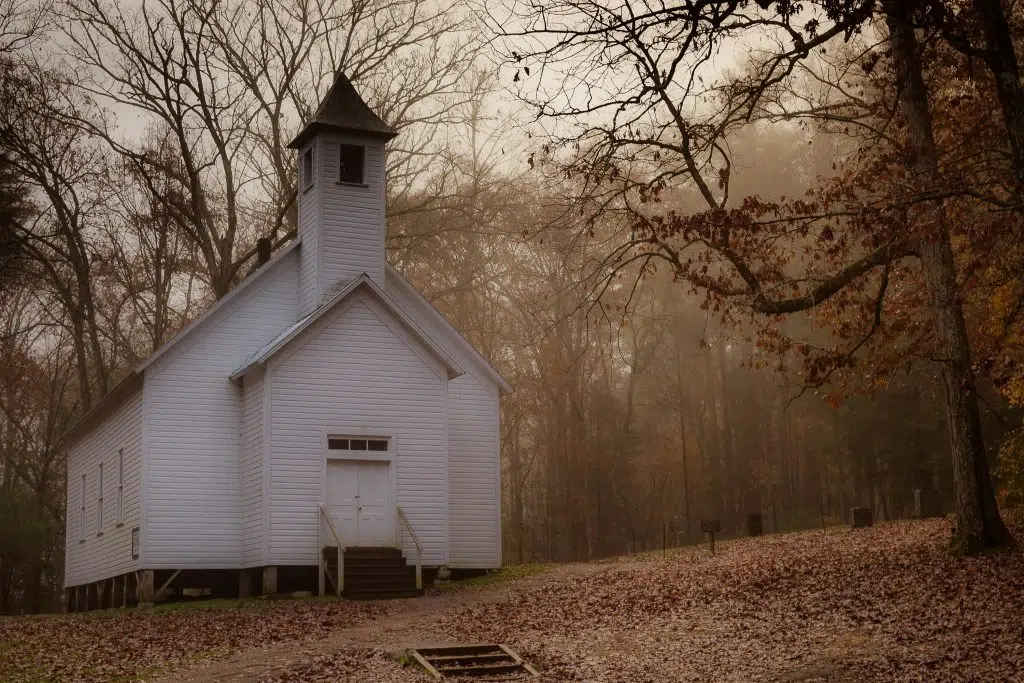
Cades Cove Primitive Baptist Church
The absolute best way to explore the valley is via the 11-mile, one-way loop road. Because it is a single-lane road with a strict 20 mph speed limit and frequent stops for wildlife, the drive typically takes anywhere from two to four hours to complete.
But here is the unfortunate reality for most visitors: if you drive the loop without a guide, you are simply looking at empty log cabins, quiet old churches, and miles of split-rail fences. You completely miss the dramatic, heartbreaking, and triumphant stories of the resilient people who called this rugged valley home. This is exactly why we created our exclusive Cades Cove driving tour audio guide.
Get Your Driving Tour Audio Guide!
Here at Smoky Mountains Lodge, we want to transform your scenic drive into a fully immersive, cinematic journey. Our Cades Cove driving tour audio guide acts as your personal park interpreter, perfectly timed to your vehicle’s odometer so you hear the right stories at the exact right locations.
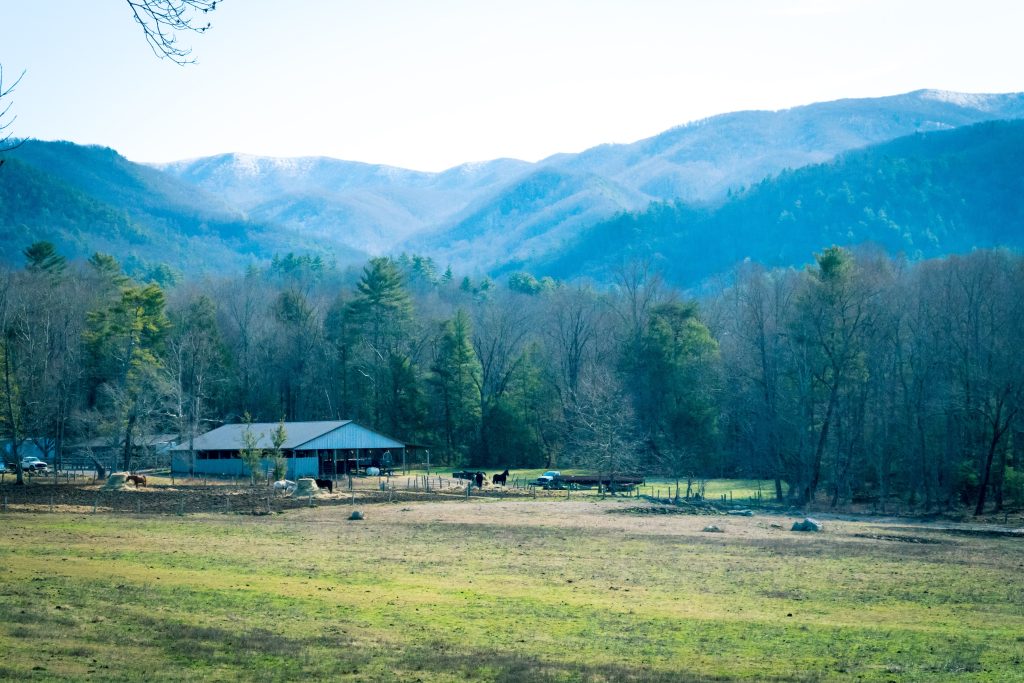
Cades Cove Valley
What You Will Discover With Our Guide:
Ancient Indigenous History: Long before European pioneers arrived, the Cherokee people utilized this fertile limestone valley—which they called Tsiyahi, or “otter place”—as a seasonal hunting ground for elk, bison, and bear.
Brilliant Pioneer Ingenuity: You won’t just look at the John Oliver Cabin—the oldest standing human structure in the park —you will learn how it was held together entirely by gravity and precise saddle-notching, without a single nail. You will also discover the architectural brilliance of the cantilever barn at the Tipton Place, designed with massive overhangs to funnel heavy mountain rain away from precious crops. You’ll even hear the romantic story behind the Henry Whitehead Place, which features a true brick chimney that Henry made entirely from scratch for his new bride.
Civil War Heartbreak: The audio guide dives deep into the valley’s dark and divided Civil War history. You’ll hear the tragic, cinematic story of Russell Gregory, a pro-Union community leader who was betrayed by his own Confederate son and murdered by North Carolina rebels—a story permanently etched on his tombstone at the Primitive Baptist Church cemetery.
The Final Residents: Learn about the fierce legal battles of the 1920s and 1930s as the government used eminent domain to systematically seize the land to create the national park. We also share the uplifting story of Kermit Caughron, the very last resident of the cove who negotiated a lease to stay and raise bees until his passing in 1999.
Expert Wildlife Viewing Tips
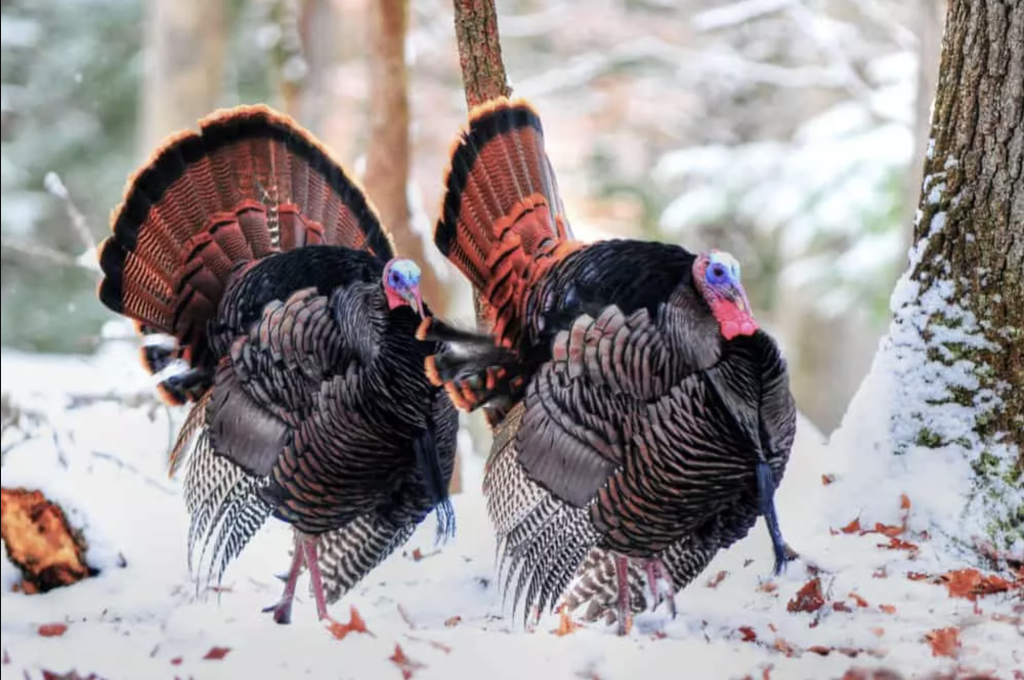
Beyond history, our audio guide helps you safely spot the park’s famous wildlife. The open valley is arguably the best spot in the Smokies to see white-tailed deer, wild turkeys, and black bears foraging in the meadows. The guide will teach you the National Park Service’s vital “rule of thumb” to ensure you are observing these magnificent animals from a safe and respectful distance.
How to Get Your Free Audio Guide:
Get Your Driving Tour Audio Guide!
Cell phone service is virtually non-existent inside the national park, which is why our driving tour audio guide is designed to be downloaded straight to your phone before you arrive. Simply submit your email on the form above and we’ll send you a downloadable link to your email. Download it to your phone before you leave the cabin. Then sync your phone to your car’s bluetooth, reset your trip odometer at the entrance gate, and press play!
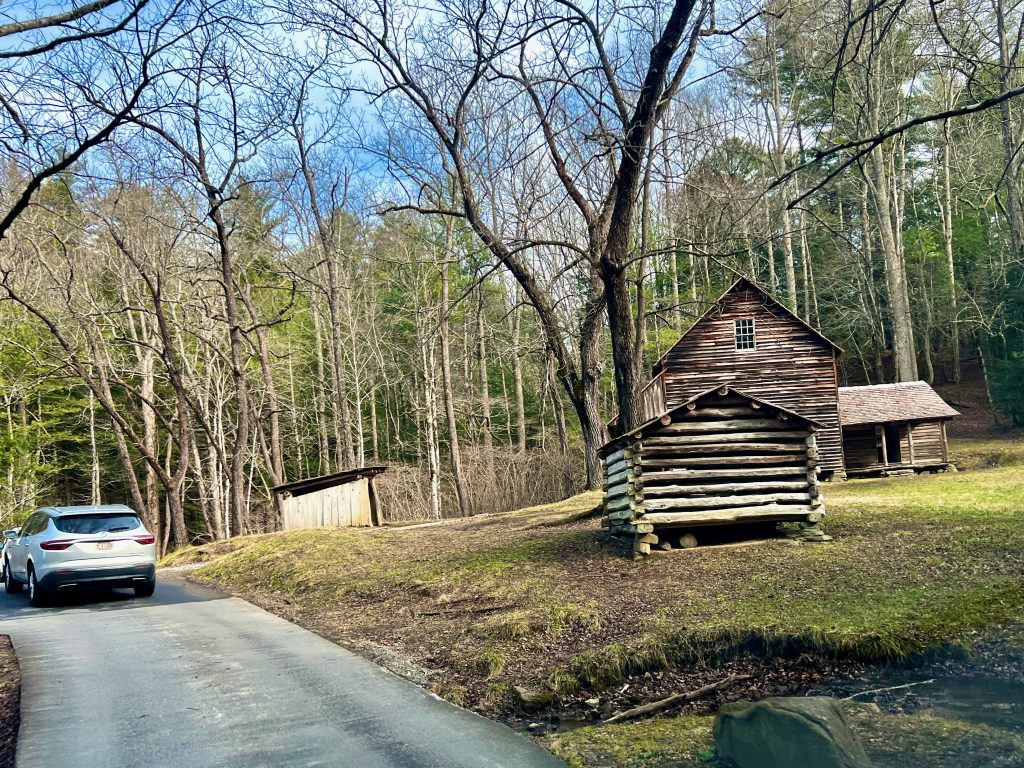
Tipton House and Corn Crib
Don’t just drive blindly through history—hear it come alive through your car speakers and experience the Great Smoky Mountains like never before!
Still looking for the perfect family cabin in the Smoky Mountains?
When guests ask us for the one absolute must-do experience in Great Smoky Mountains National Park, our answer is always the same: the Cades Cove scenic loop. Tucked into an isolated valley ringed by mile-high peaks, Cades Cove is where the Smokies open up — wide green meadows, mist clinging to the ridgelines at dawn, hand-hewn cabins from the 1820s, and the densest wildlife viewing east of the Mississippi. It’s the rare destination that genuinely lives up to the hype, even on its tenth visit.
Whether you’re staying a few minutes away with us at our cabin in Wears Valley or driving in for the day, this guide will help you make the most of it — what to see, when to go, what to pack, and the small details most other guides miss.
New for 2026: We’ve produced a free Cades Cove Audio Guide Companion — a self-paced narration that plays from your car as you drive the loop, calling out hidden details, history, and the best wildlife pull-offs in real time.
Cades Cove at a Glance
What it is
An 11-mile, one-way paved scenic loop through a historic Appalachian valley
Where
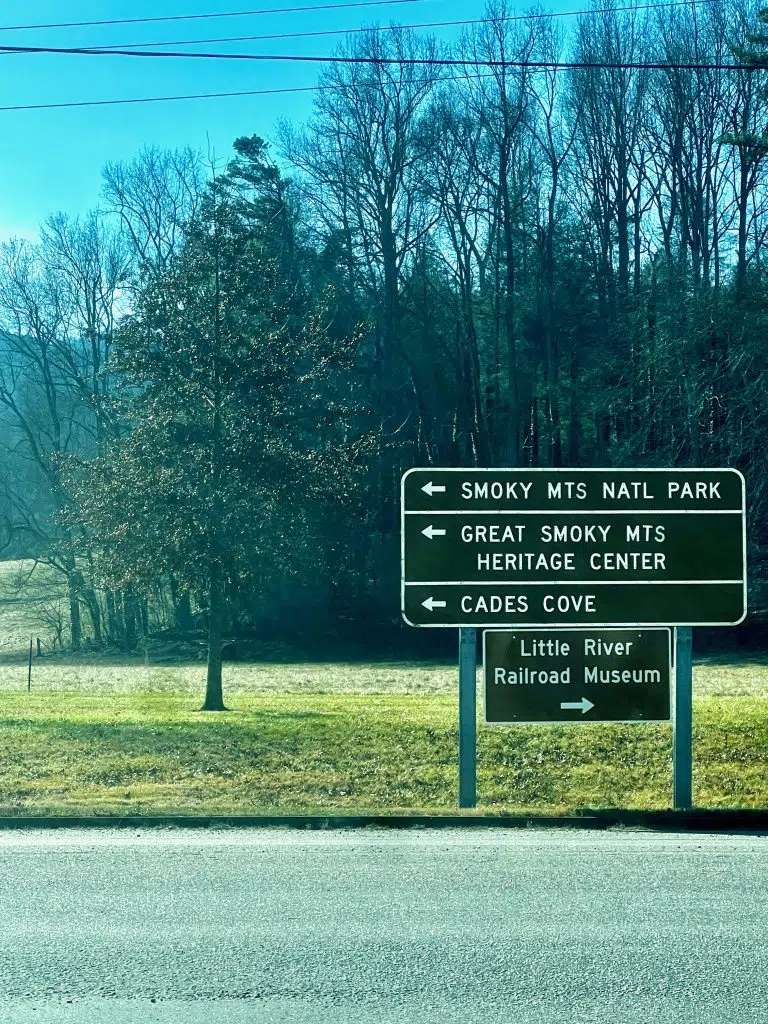
Inside Great Smoky Mountains National Park, accessed via Townsend, TN
From our cabin in Wears Valley
~10 minutes to the park entrance at the Townsend “Y,” ~40 minutes to the loop’s start
Cost
No entrance fee, but a parking pass is required if you stop more than 15 minutes ($5 daily / $15 weekly / $40 annual)
Time to drive the loop
2–4 hours typical; allow a full half-day with stops
Every Wednesday from May 6 – September 30 (cyclists & pedestrians only)
Why Cades Cove Is Worth a Full Day
Cades Cove is the most-visited destination inside America’s most-visited national park, and the reason is simple: in a single 11-mile drive, you can see what most of the country no longer offers. Open meadows that stretch toward the ridgeline. Black bears foraging at the tree line in the early morning light. Three preserved 19th-century churches still standing where the congregations left them. A working grist mill turning the same way it did in 1870.
It’s not just a scenic drive. It’s a slow, deliberate immersion into the Southern Appalachians the way they were before the park existed — when this valley was home to a community of around 700 farmers, millers, and mountain families. The National Park Service preserved the most important structures and let everything else return to forest, which is why deer and turkey now graze the fields where corn used to grow.
If you’re staying with us, this is the day we tell guests to clear their schedule for.
Getting to Cades Cove from Wears Valley
One of the quiet advantages of staying in Wears Valley is how close you are to the quieter entrance to the park. While most visitors funnel in through Gatlinburg and the Sugarlands entrance, our side of the mountain accesses the park through Townsend, “the peaceful side of the Smokies,” which puts you on the doorstep of Cades Cove.
The drive from our cabin:
From the cabin, take Wears Valley Road (US-321) west toward Townsend (~10 minutes to the park boundary).
At the Townsend “Y”, turn left (south) onto Laurel Creek Road. This is the gateway to Cades Cove.
Follow Laurel Creek Road for roughly 7.5 miles as it curves through forest along the river. It’s a beautiful drive in its own right — keep an eye out for swimming holes and tubing pull-offs in summer.
Arrive at the Cades Cove Loop entrance and orientation area.
Total drive time from our cabin to the loop’s starting point: roughly 35–45 minutes, depending on traffic. From a Pigeon Forge or Gatlinburg cabin, the same drive takes 60–90 minutes — one of the reasons we steer guests toward this route. You’ll also pass the Townsend Wye, a scenic confluence of the Little River that’s worth a stop on the way back.
Pro tip: Gas up in Townsend before entering the park. There are no fuel stations inside, and the loop’s stop-and-go pace can drain a tank faster than you’d expect.
Park It Forward: Parking Tags & Practical Logistics
Since March 2023, Great Smoky Mountains National Park has required a parking tag for any vehicle parked more than 15 minutes inside the park. There is still no entrance fee — you can drive through freely — but if you plan to stop, hike, or explore (which you will), you need a tag.
Tag options:
Daily tag — $5 (valid until 11:59 PM ET on the date of purchase)
Weekly tag — $15 (valid for 7 days)
Annual tag — $40 (good for 12 months, must be ordered ahead and shipped)
Where to buy:
Online via recreation.gov (daily/weekly — must print at home)
24-hour automated kiosks at the Cades Cove entrance, the Townsend Wye, and other locations
In person at the Townsend Welcome Center or Cades Cove Visitor Center
Important rules:
Tags must be physically printed and displayed face-up on the front passenger dashboard. Phone screenshots are not accepted.
Each tag is tied to a specific license plate.
Vehicles with state-issued disabled placards or plates are exempt.
An America the Beautiful interagency pass does not cover the parking tag.
We keep a small stack of printer-fresh tag holders and instructions at the cabin, but the easiest path is to buy online a day before, print at home, and bring it with you.
The 11-Mile Loop: What to Expect
The Cades Cove Loop Road is a one-way paved drive that traces the perimeter of the valley. Speed limit: 20 mph. Expected pace: much, much slower. This is by design.
Traffic moves at a crawl, especially during peak leaf season (mid-October) or during a “bear jam” — the local term for the inevitable moment when a black bear ambles out of the tree line and twenty cars stop to watch. Embrace it. Roll the windows down. Let the mountain air in. Cades Cove rewards patience, not speed.
The Audio Guide Companion
To make the slow pace work for you instead of against you, we produced a free Cades Cove Audio Guide Companion — a narrated tour you can stream from your phone through your car’s speakers as you drive. It’s timed to the major pull-offs and historic stops and includes:
Ancient Indigenous History of the Cherokee people
Brilliant Pioneer Ingenuity of the cabins that still stand today
Civil War Heartbreak, including the story of cinematic story of Russell Gregory, a pro-Union community leader
The Final Residents, including an uplifting story of Kermit Caughron, the very last resident of Cades Cove
And much more!
Get Your Driving Tour Audio Guide!
We made it specifically for guests of our cabin, but anyone is welcome to use it. No app to download, no signal needed once it’s queued up (which matters, because there’s no cell service in the cove).
Key Landmarks & Historic Sights
Cades Cove is essentially a living museum, with structures preserved exactly where the families left them when the park was established in the 1930s. Here’s what you’ll find as you drive the loop in order:
John Oliver Cabin (Stop ~1)
The first cabin you’ll encounter, built in the 1820s by John and Lurena Oliver, the first European settlers in Cades Cove. It’s the oldest standing human structure in the park. It is a single-room log cabin held together without a single nail — entirely by notched corners and gravity. Step inside (yes, you can) and notice how low the ceilings are, how small the windows are, and how dark it gets even on a sunny afternoon. This is what mountain life actually looked like.
The Three Historic Churches
Cades Cove preserved three churches — a remarkable density for such a small population, reflecting the doctrinal differences that shaped Appalachian communities.
Primitive Baptist Church (pictured below and founded 1827, current building 1887) — has its own cemetery where many of the cove’s earliest families are buried, including Civil War-era graves.
Cades Cove Methodist Church — the most photographed of the three, with its simple white clapboard and a single front entrance unusual for the period.
Missionary Baptist Church — formed in 1839 after a doctrinal split from the Primitive Baptist congregation. The interior is austere and beautiful.
Walking through any one of them is a quietly moving experience. Most visitors only stop at one — make time for at least two.
Elijah Oliver Place (short walk off the loop)
Tucked behind a half-mile spur trail (worth doing — it’s flat and shaded), this is the most complete homestead in the cove. You’ll find the cabin, a smokehouse, a “stranger room” (an entry porch where unknown travelers could sleep without entering the family quarters), a corn crib, and a springhouse. It feels lived-in in a way the more visited cabins don’t.
Cable Mill Historic Area (~halfway around)
This is the largest cluster of structures and the loop’s natural midpoint. You’ll find:
A working grist mill that still grinds corn, powered by water from Mill Creek
A cantilever barn — a uniquely Appalachian design where the upper level overhangs the lower
A blacksmith shop with periodic live demonstrations
The Becky Cable House (a substantial framed home, a step up from the log cabins)
The Cades Cove Visitor Center, which has a small museum, restrooms, and the bookstore where you can buy parking tags if needed
A pollinator garden planted with the same crops the original residents would have grown
Plan at least 45 minutes here. The visitor center restrooms are the only modern facilities on the loop, so use them while you can.
Other Stops Worth Slowing For
Carter Shields Cabin (near loop’s end) — a tiny log cabin in a clearing that becomes the most photographed structure in the cove during dogwood and rhododendron bloom (April–May).
Tipton Place (pictured below) — a white-painted farmhouse complex with a smokehouse, woodshed, and double-pen cantilever barn.
Henry Whitehead Place — a fascinating “transitional” cabin showing how the cove’s architecture evolved from rough-hewn logs to sawn lumber.
Wildlife Viewing: The Real Reason People Come
Cades Cove is, hands down, the best wildlife viewing in the Eastern United States. The combination of open meadows, water sources, and protected status makes it a near-guaranteed sighting on any given visit.
What You’ll See
Black bears. The cove is home to roughly two bears per square mile — among the highest densities anywhere in their range. Best viewing is early morning (sunrise to ~9 AM) and late afternoon (5 PM to sunset) when bears are foraging at the meadow edges. Look for the “bear jam” — a line of stopped cars is the surest sign of a sighting.
White-tailed deer. You will absolutely see deer. Not “might” — will. Herds graze the open fields, especially at dawn and dusk. In the fall, you may catch bucks in rut.
Wild turkeys. Flocks of 20+ are common, particularly in the meadows near the start and end of the loop.
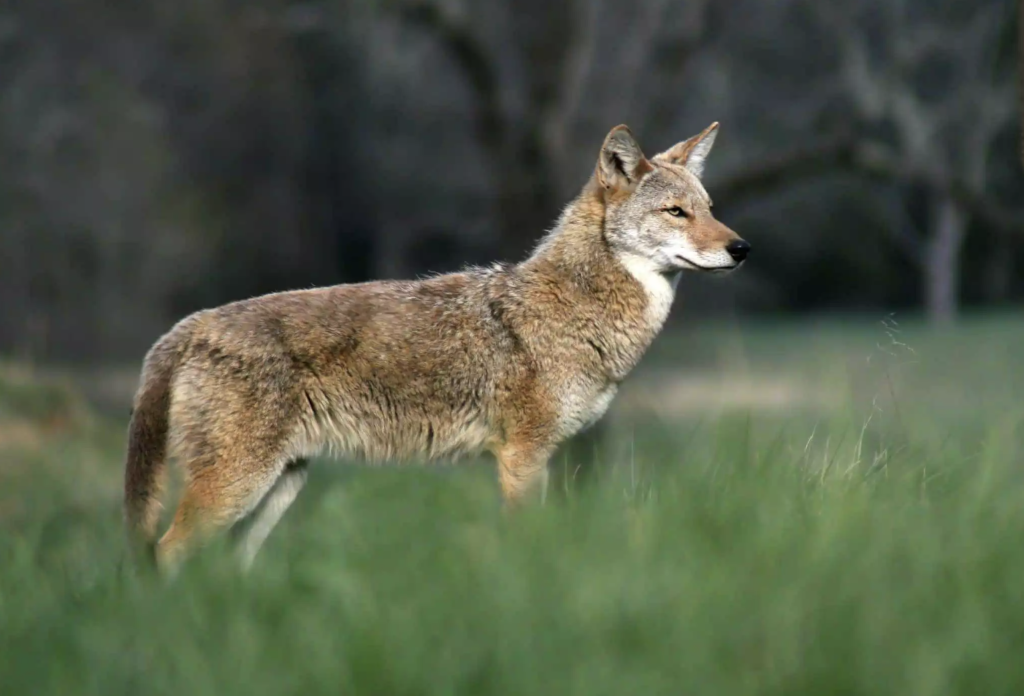
Coyotes. Less common but often visible in the long grass during early morning.
Elk. Note: elk are not found in Cades Cove. They’re in the Cataloochee Valley on the North Carolina side. If a guide promises you elk in Cades Cove, find a different guide.
Bobcats, foxes, otters. Possible but rare; a flash of luck if you spot one.
The Wildlife Rules
Maintain at least 50 yards (150 feet) from bears and elk. This is federal law inside the park.
Stay 25 yards from all other wildlife.
Never feed any animal, including deer that approach your car. A fed bear is a dead bear — they get habituated, become aggressive, and have to be put down.
Stay in your vehicle if a bear is on the road. Approaching for a photo has caused multiple maulings.
A telephoto lens or zoom binoculars turn this into the trip of a lifetime.
Trails & Side Adventures Off the Main Loop
If you want to step away from the car, Cades Cove is a trailhead for some of the park’s best hikes.
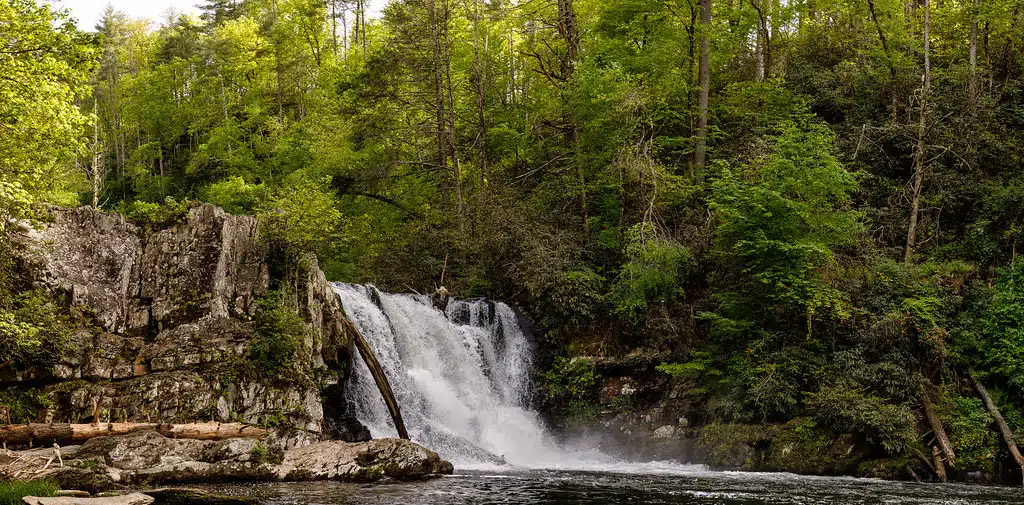
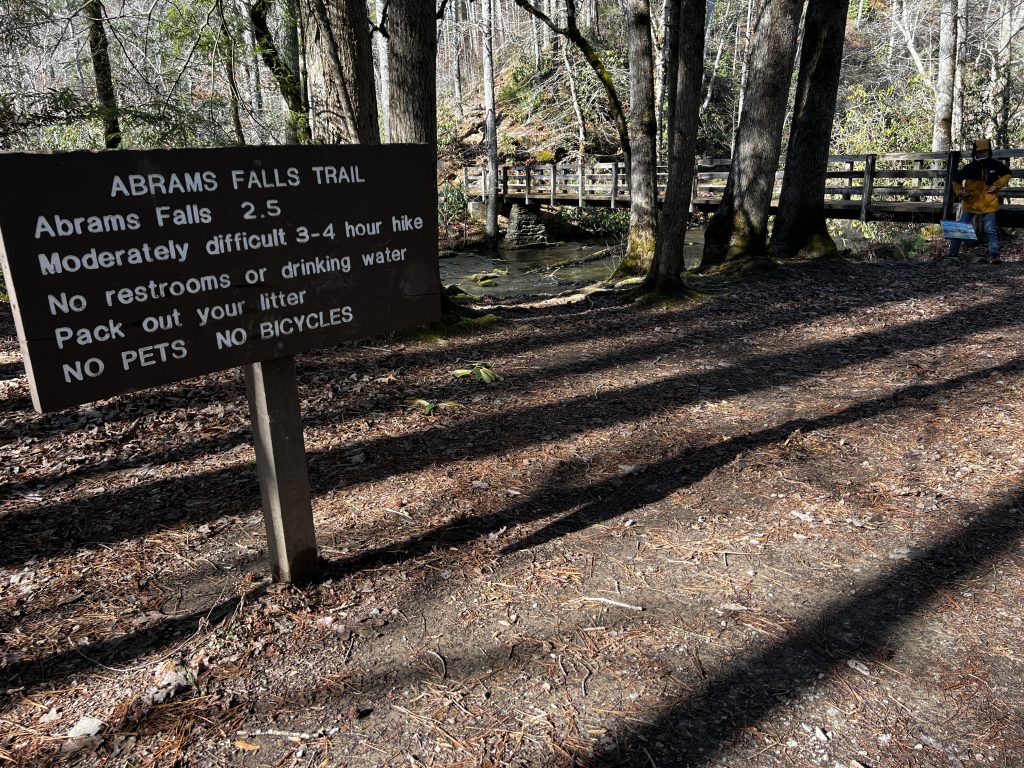
Abrams Falls Trail
5.2 miles round-trip, moderate difficulty, ~3–4 hours
Trailhead just past stop #10 on the loop
Reward: a thunderous 20-foot waterfall that pours over a wide ledge into a deep, dark pool
Do not swim — the recirculating current at the base has caused multiple drownings. Beautiful, but for looking, not entering.
Rich Mountain Loop
8.5 miles round-trip, strenuous, ~5–6 hours
For solitude away from loop traffic
Climbs to elevated views looking back down into the cove — one of the few hikes where you can see Cades Cove from above
Best in spring for wildflowers or fall for color
Sparks Lane & Hyatt Lane
These two two-way gravel roads cut directly across the middle of the loop, connecting the north and south sides. They’re often overlooked but offer the most unobstructed panoramic meadow views in the entire cove. Walking either lane during the golden hour before sunset is one of the best photography experiences in the park, with mountain light raking across the open valley.
Anthony Creek Trail / Bote Mountain
Branches off near the picnic area; a moderate forest hike that connects to the broader park trail network. A good shorter option if you want a real hike but don’t want a full-day commitment.
Vehicle-Free Wednesdays (May–September 2026)
In 2026, the National Park Service is again hosting Vehicle-Free Wednesdays at Cades Cove from May 6 through September 30. On these days, the entire 11-mile loop is closed to motor vehicles and reserved for cyclists and pedestrians only.
If you’re staying with us during the warm months, this is genuinely worth planning your week around. Riding the loop without traffic, stopping wherever you want, hearing actual birdsong instead of engines — it transforms the experience.
What to know:
Bike rentals are available at the Cades Cove Campground Store ($10–$15, helmets included). They’re popular and first-come, first-served — arrive early.
Class 1 and Class 2 e-bikes are allowed. Scooters and skateboards are not.
Helmets required for cyclists; 20 mph speed limit enforced.
Parking is extremely limited on vehicle-free days. Park rangers recommend arriving in the afternoon rather than morning for the best chance at a spot.
Parking tag still required.
No cell service — bring snacks, water, sunscreen, and a small bike repair kit.
The full loop takes most casual cyclists 3–4 hours; you can shortcut via Sparks Lane or Hyatt Lane to make it shorter.
When to Visit: Best Time of Day & Best Season
Best Time of Day
Sunrise to 9 AM — peak wildlife activity, golden light on the meadows, smallest crowds. This is the answer.
Late afternoon to sunset — second-best for wildlife and the famous “blue hour” mountain light.
Midday — gorgeous if you can tolerate slow traffic, but harder for wildlife.
June–August — lush green, longest daylight, busiest period. Plan early starts.
Mid-October — peak fall color (typically the second and third weeks of October). Spectacular but congested. The loop can take 4+ hours.
November–March — quietest, atmospheric, often with mist or light snow on the peaks. Some hike trailheads may be muddy. Wildlife sightings drop slightly but are still common.
If you’re coming during peak season (summer weekends and October), aim to be at the loop entrance before 8 AM. Once the parking areas fill, rangers turn cars away.
What to Pack for Your Cades Cove Day
A short, honest checklist for a successful visit:
Printed parking tag (this is the #1 thing people forget)
A full tank of gas — none available inside the park
Water (1 liter per person minimum) and snacks
Binoculars or a telephoto lens — to see wildlife across the meados
Layers — temperatures can swing 20°F between morning and afternoon
Real shoes if you plan to hike Abrams Falls or the Cable Mill area
A paper map or offline-downloaded Google Maps — there is no cell service in the cove
Bug spray in summer
A picnic — there’s a beautiful picnic area near the campground entrance, ideal for lunch
Cash — the visitor center bookstore takes cards, but it doesn’t hurt
Photography Tips for the Cove
The “blue hour” — the 30 minutes before sunrise and after sunset — gives the cove its iconic moody look. Sparks Lane and Hyatt Lane are unbeatable here.
Backlit fog in the early morning, especially in spring and fall, creates the misty layered-ridge shots the Smokies are famous for.
Carter Shields Cabin in May, framed by blooming dogwoods, is the cove’s most-photographed scene.
Cable Mill with its waterwheel running is best mid-morning when the light hits the mill yard.
For wildlife, a 300mm or longer lens is ideal. Even a phone with strong digital zoom can capture deer at distance.
Tripods are allowed at all overlooks but be respectful of foot traffic.
Cades Cove with Kids
Families do well in Cades Cove because the experience is built around looking, not exertion. A few tips:
The Cable Mill area is the kid highlight — the working mill, blacksmith, and animals are tangible, and the visitor center has a junior ranger program.
Sparks Lane and Hyatt Lane are great for short walks that feel like adventures without being demanding.
The drive itself can be slow — bring snacks, an audio guide (ours, ideally), and a wildlife bingo card.
Abrams Falls is too long for most kids under 8; the Elijah Oliver spur (1 mile round-trip) is a better bet.
The cove has a picnic area near the campground with covered tables, restrooms, and shade — perfect for lunch.
After a full day in the cove, the 900 sq ft game room back at the cabin tends to be the deciding factor in who has the best vacation memory: kids want pool and ping-pong and the arcades, parents want the hot tub. Both win.
Still looking for the perfect family cabin in the Smoky Mountains?
Game room equipped with ping pong, foosball, and pool
Spacious Game room and movie space
Open living room
Dedicated movie space + Popcorn machine!
Battle on the arcade games
Dining room + Kitchen island
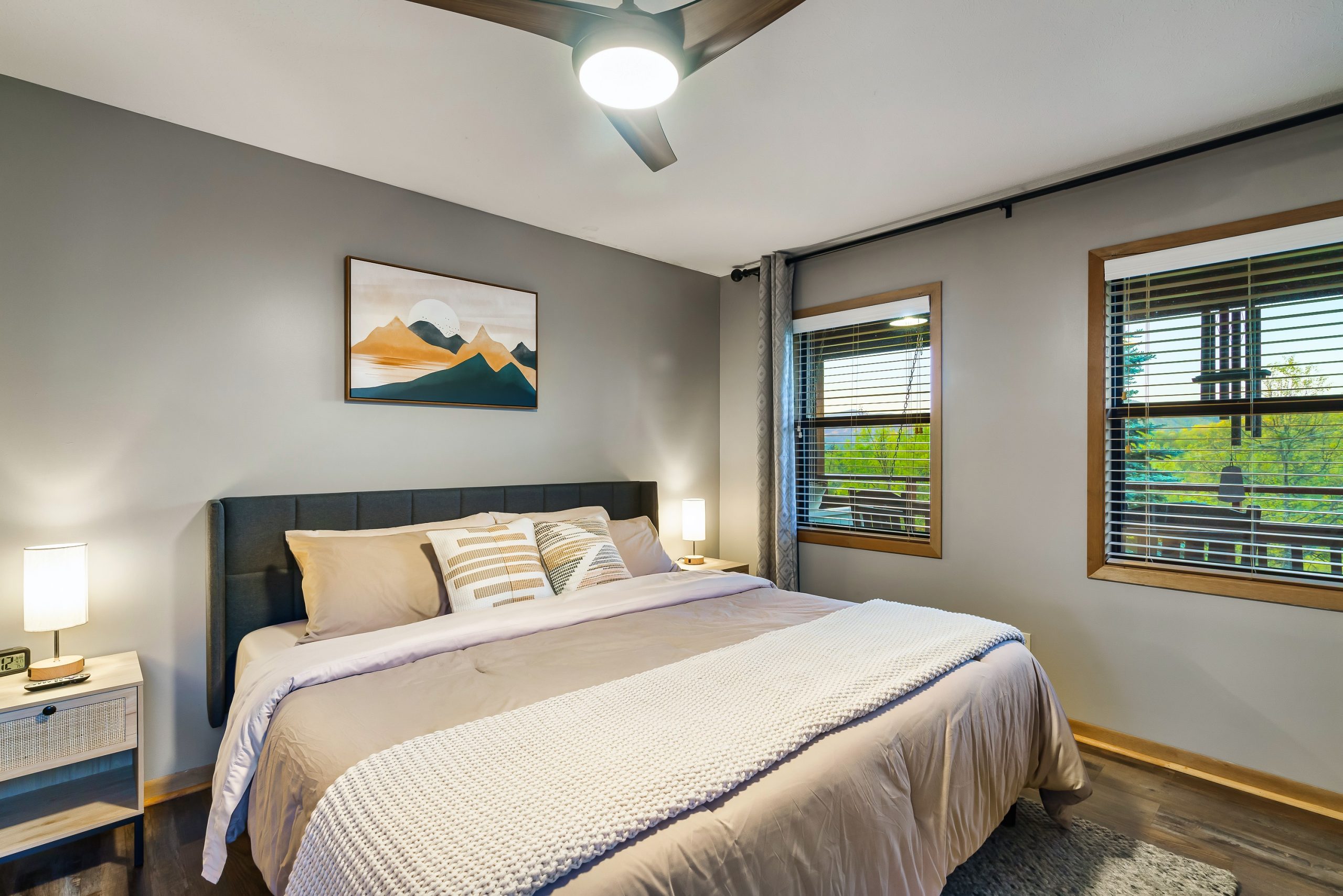
Upstairs king master bedroom with mountain views
2nd upstairs king bedroom with views of the mountains
Downstairs queen bedroom and Roku TV
2 twin bunk beds in the open game room
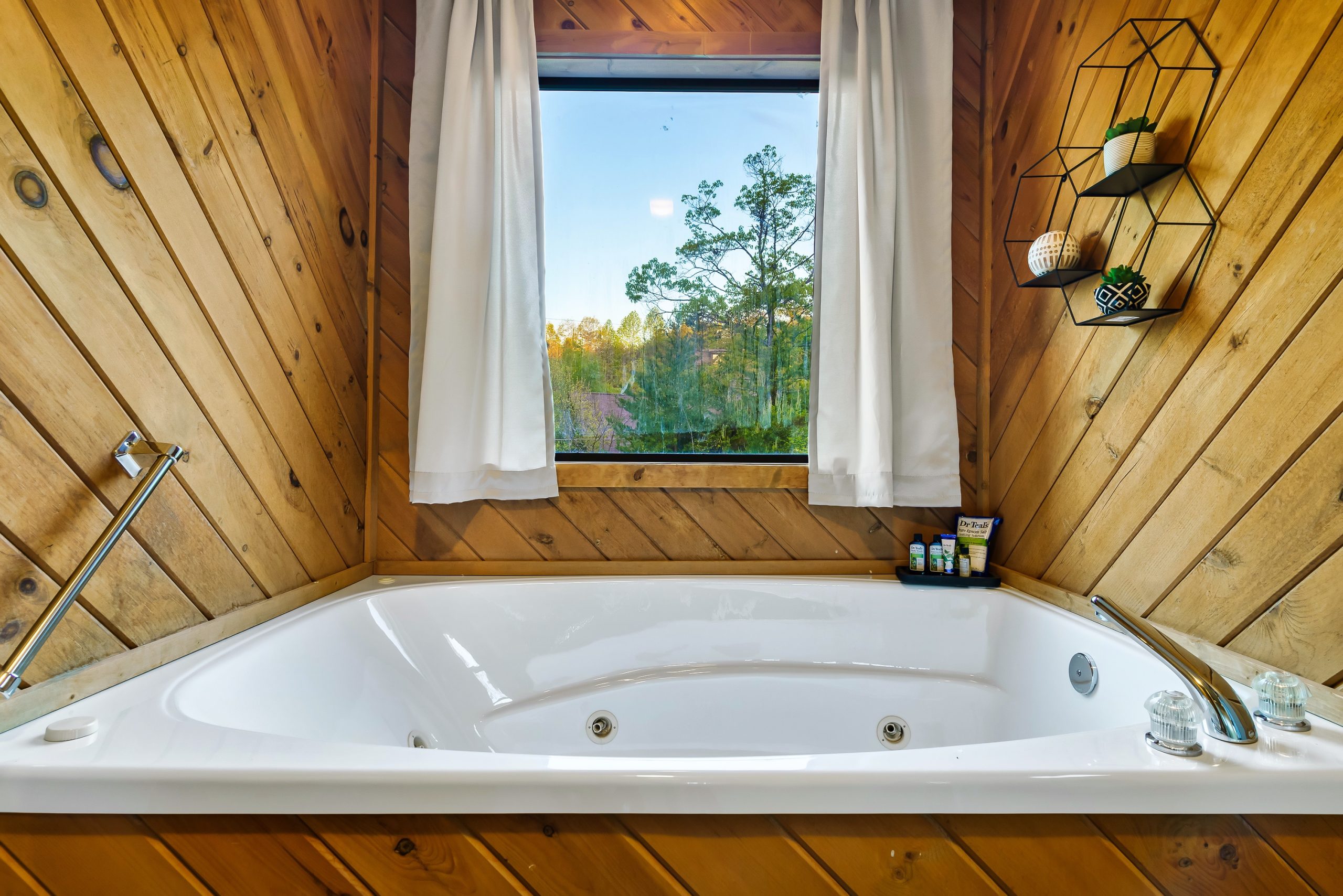
Jacuzzi off the 2nd king bedroom
Newly remodeled kitchen + island
Driveway at dawn
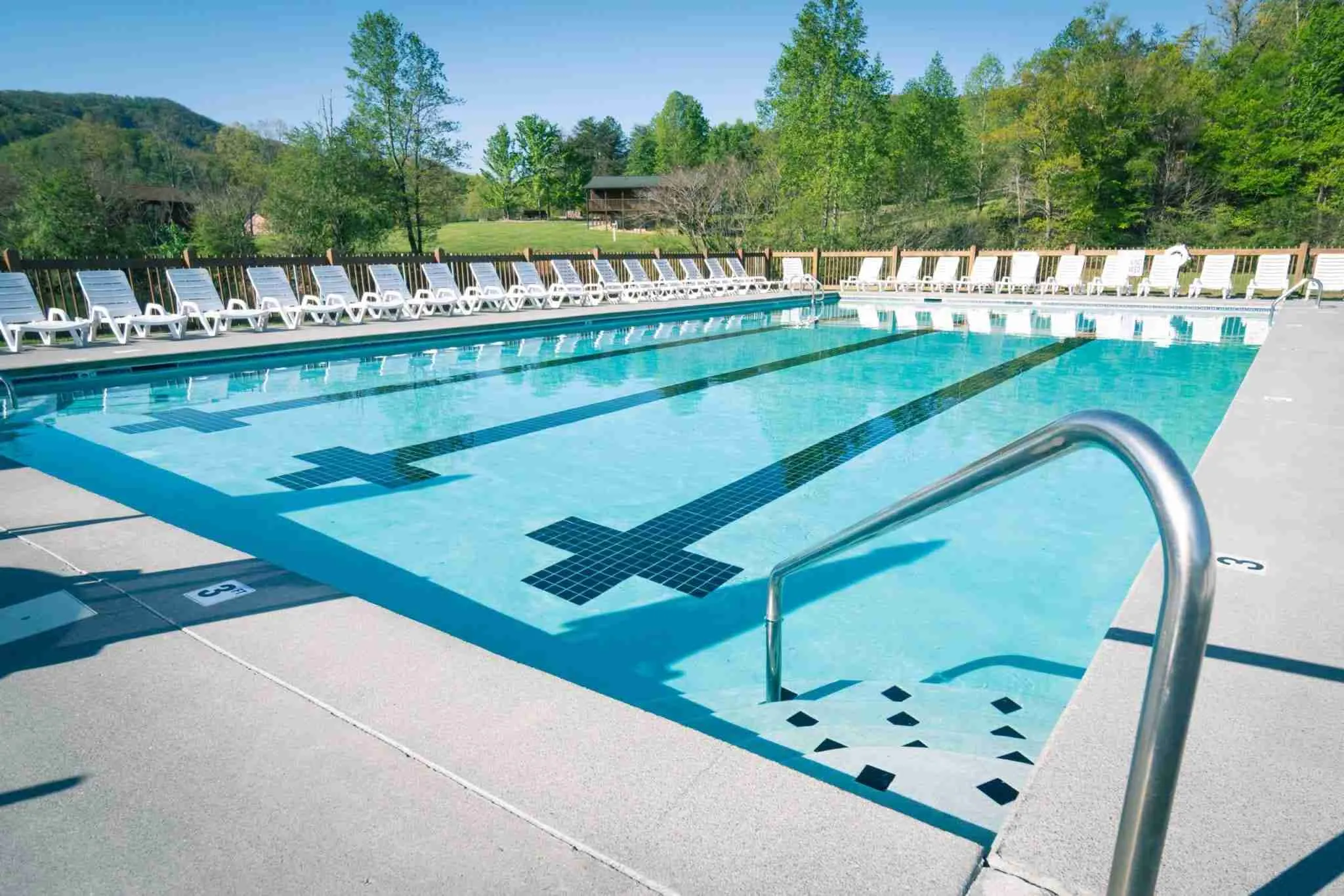
Access to the community pool
Frequently Asked Questions
How long does it take to drive the Cades Cove Loop?
Plan for 2–4 hours at minimum, including stops. With unhurried exploration of the historic structures and a hike, expect a half to full day. During peak fall foliage, the drive alone can take 4+ hours due to bear jams and traffic.
Is there an entrance fee for Cades Cove?
There’s no entrance fee for Great Smoky Mountains National Park, but a parking tag ($5 daily, $15 weekly, or $40 annual) is required if you stop for more than 15 minutes anywhere in the park.
Can you visit Cades Cove year-round?
Yes. The loop is open daily from sunrise to sunset, year-round, weather permitting. It can close briefly during heavy snow or ice, typically December through February. Always check the park’s road status page before driving up.
Is there cell service in Cades Cove?
No. There is no cell service inside the cove. Download maps offline before you go, queue up your audio guide, and let people know your plans before entering the park.
What’s the closest town to Cades Cove?
Townsend, Tennessee is the closest town and the gateway most locals use. Wears Valley (where our cabin is located) is just minutes from Townsend and even closer to the park’s western entrance than Gatlinburg or Pigeon Forge.
Can you bike Cades Cove?
Yes, any day of the week, but Vehicle-Free Wednesdays (May 6 – September 30, 2026) are by far the best experience because the loop is closed to cars. Bike rentals are available at the Cades Cove Campground Store.
Is Cades Cove kid-friendly?
Very. The slow pace, abundant wildlife, easy walks, and tactile historic structures make it one of the most family-friendly destinations in the park. The Cable Mill area in particular is a hit with kids.
When are bears most active in Cades Cove?
Early morning (sunrise to 9 AM) and late afternoon (5 PM to sunset) during spring, summer, and fall. Bears hibernate loosely in winter and are seen less often December through February.
Do I need a 4WD vehicle?
No. The loop is fully paved and accessible to any car. Sparks Lane and Hyatt Lane are gravel but well-maintained and fine for sedans in dry conditions.
How early should I arrive during peak season?
Aim to be at the loop entrance before 8 AM during summer weekends and October. After that, parking fills and traffic on the loop slows dramatically.
Returning to Your Cabin in the Smokies
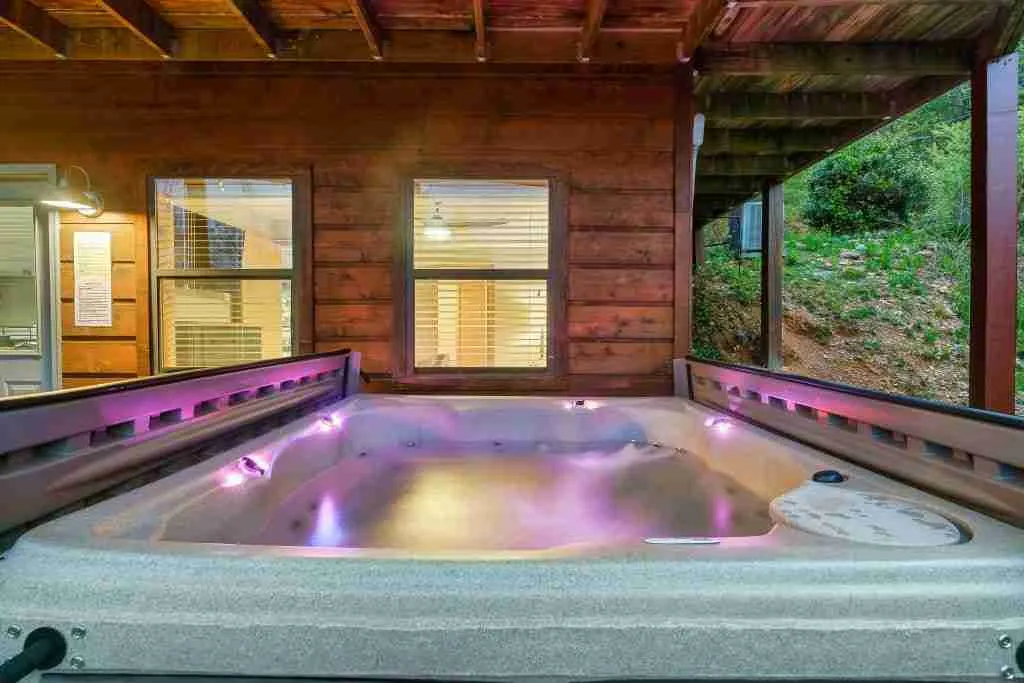
After a full day of bear-spotting, mill-watching, and ridge-line gazing, the right way to end a Cades Cove day is to come back to a quiet ridge-top cabin, dip into the hot tub, and not move.
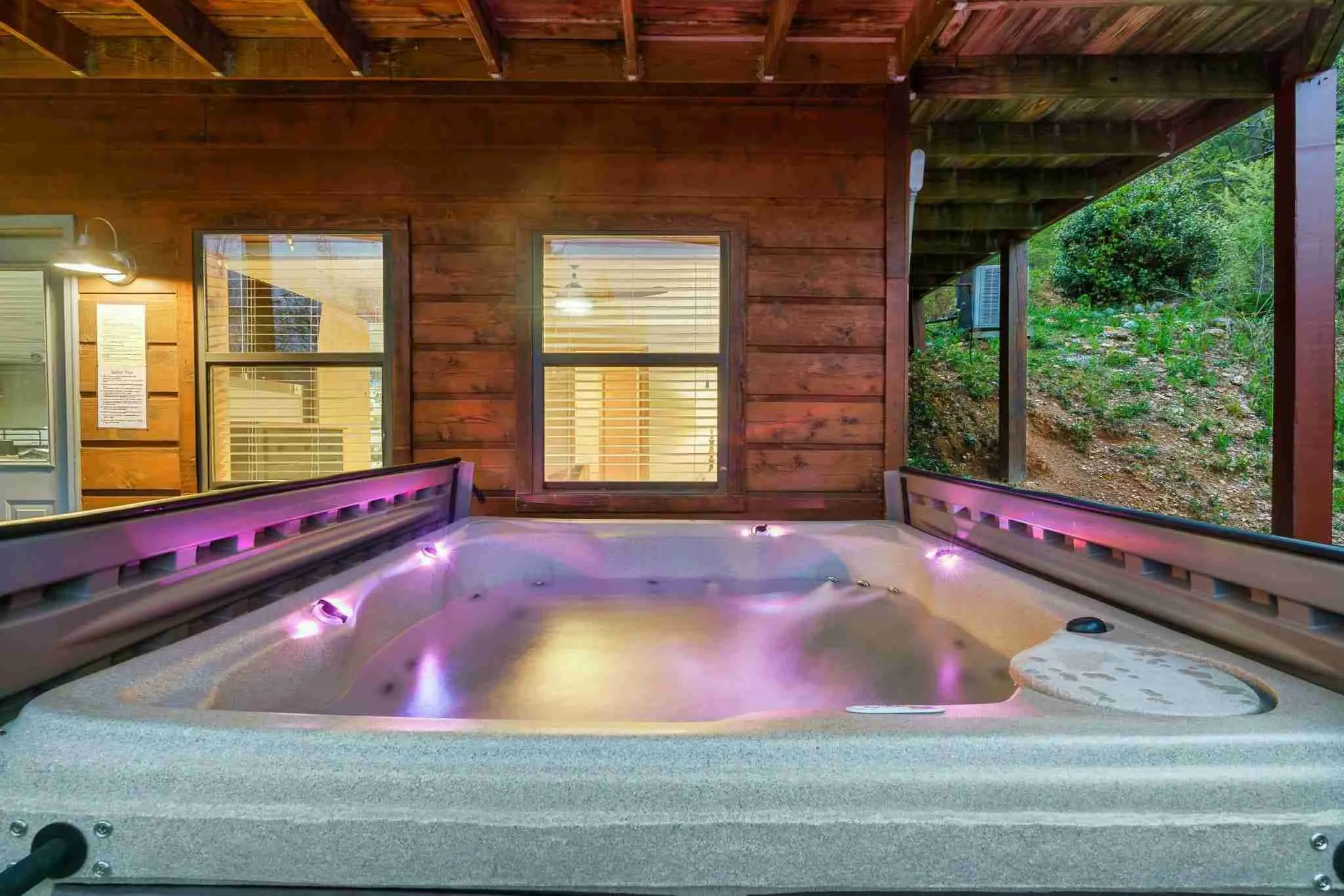
7-seater hot tub
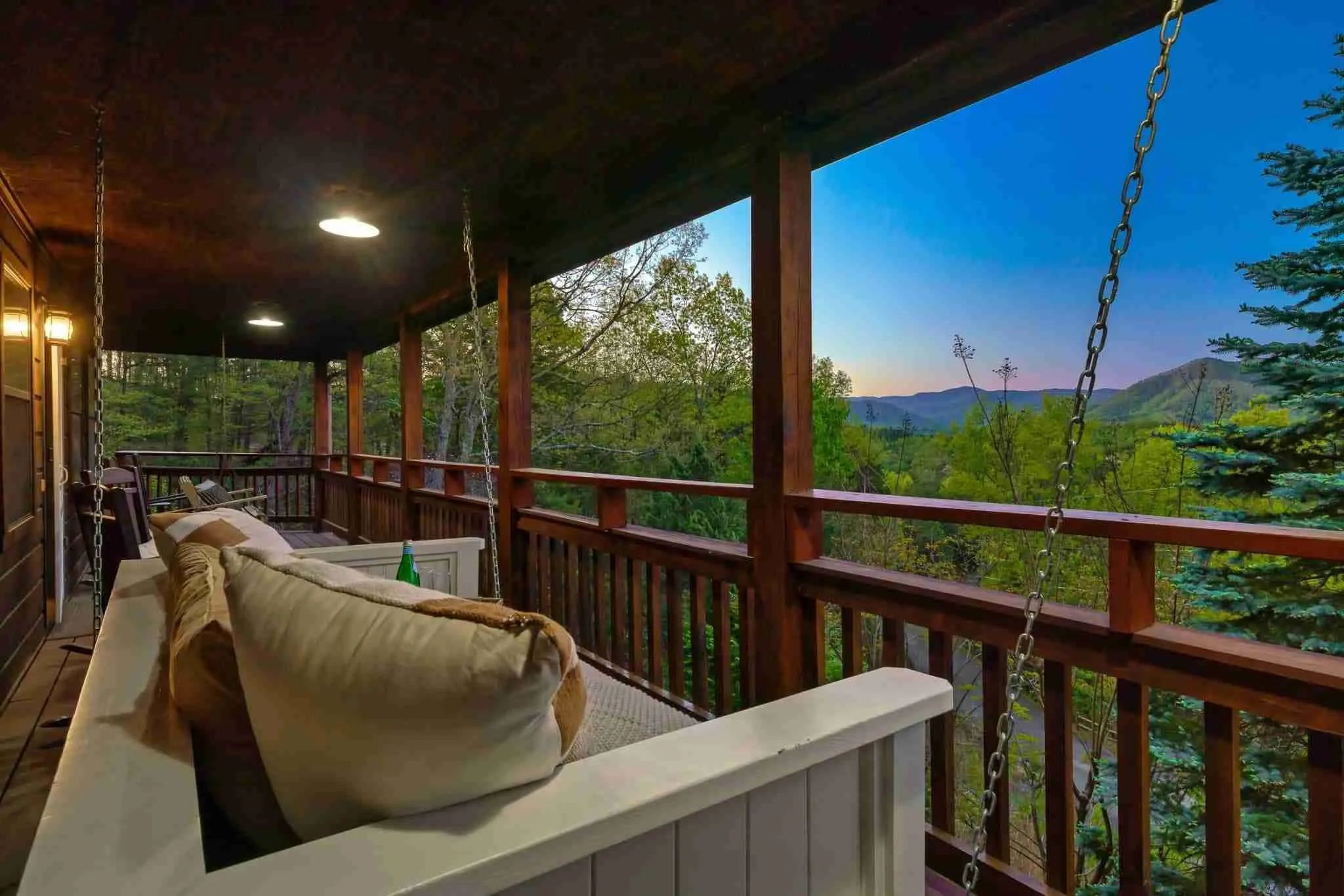
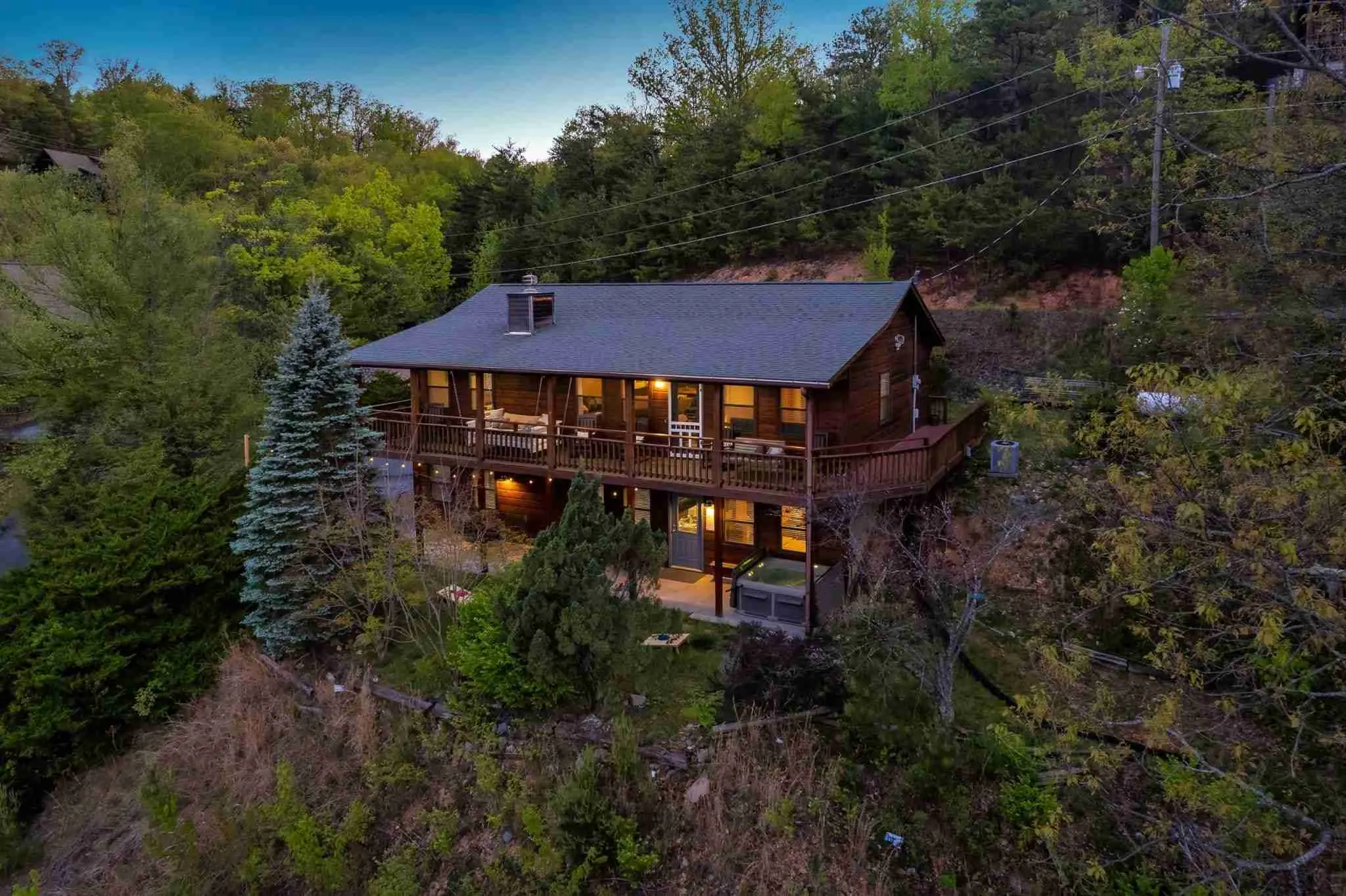
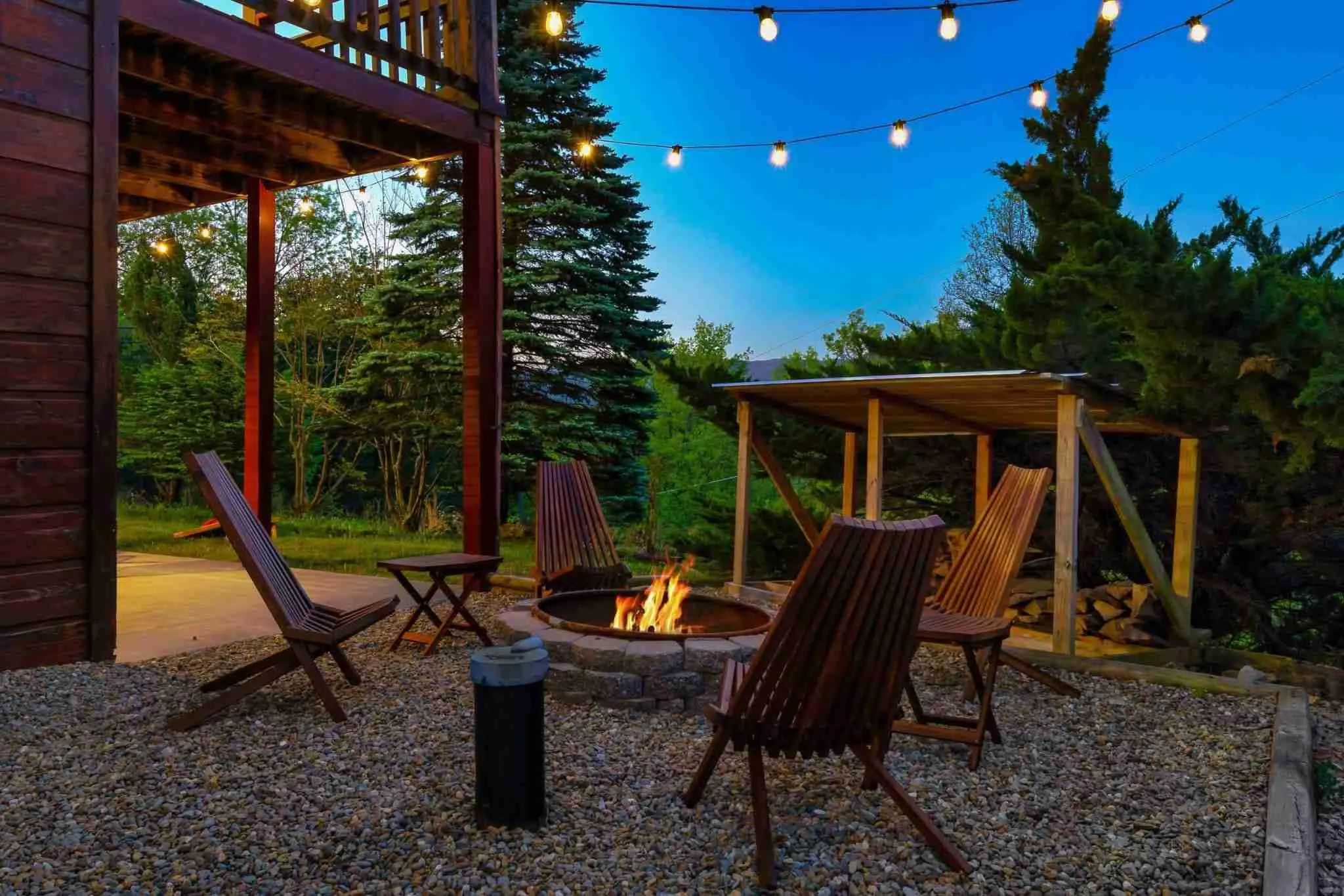
When you stay at our cabin in Wears Valley, you’re not just sleeping somewhere convenient — you’re returning to your own private retreat 10 minutes from the park entrance you used that morning. Step out onto the upper deck. The same blue ridges you drove past at sunrise are now turning orange. See all the photos of our family cabin. Fire up the charcoal grill, throw on whatever’s been marinating since breakfast, and let the kids commandeer the 900 sq ft game room with its three retro arcades, pool table, ping-pong, and foosball. Adults claim the 7-person hot tub under the stars while the stone fire pit crackles for s’mores.
The next morning, the panoramic mountain view from every bedroom is your alarm clock, and you’ll have your second hot Keurig in hand and a stack of pancakes before most park visitors have left their hotel rooms in town.
That’s the difference between visiting the Smokies and staying in them.
Book Now: This goes to our secure portal to review your info and confirm booking.
Send Inquiry: If you’re not quite ready to book, you can send an inquiry with any questions.
Plan Your Cades Cove Day From Our Cabin
Cades Cove is an experience that rewards proximity, patience, and good planning. Staying with us in Wears Valley gives you the first two automatically — and this guide should handle the third.
Last updated: April 2026. Park policies, vehicle-free dates, and parking tag fees current as of publication. Always confirm with nps.gov/grsm before your visit.
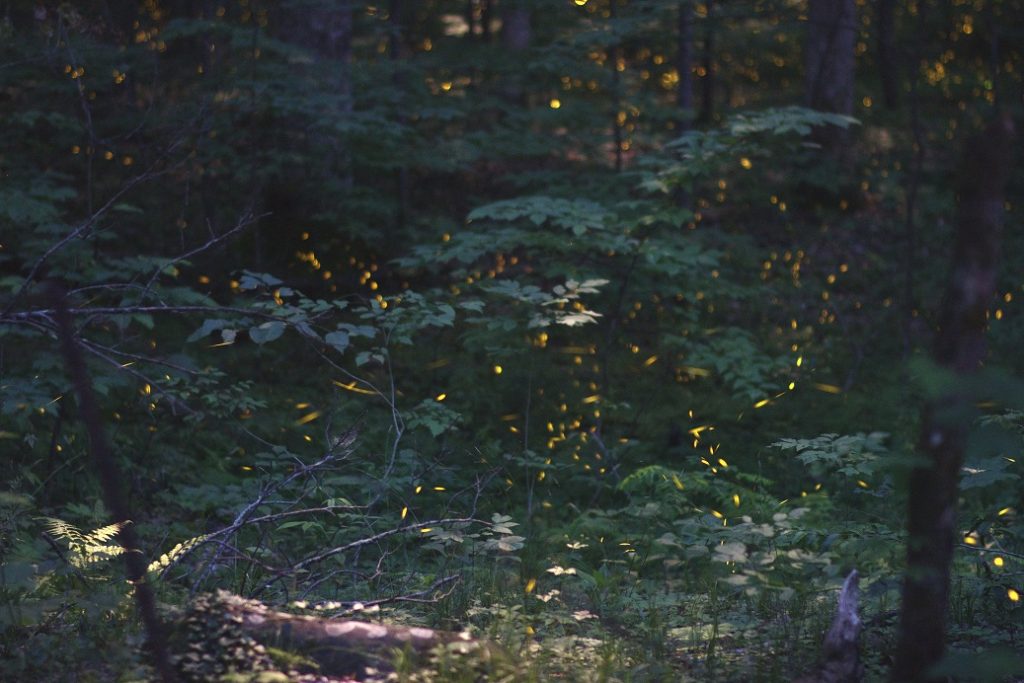
Every year, nature puts on one of its most enchanting displays right here in the Smoky Mountains — synchronous fireflies lighting up the forest in perfect unison, creating a breathtaking spectacle unlike anything else on Earth. These tiny insects flash in remarkable synchrony during their brief mating season, drawing visitors from across the country and around the world. If you’re planning to witness this natural phenomenon in 2026, here’s everything you need to know about when, where, and how to see the synchronous fireflies in the Smoky Mountains, Tennessee.
When to Go:
The synchronous fireflies typically emerge during their mating season for roughly two weeks between late May and early June, centered around the Elkmont Campground area of Great Smoky Mountains National Park. The spectacular light show typically begins around 9:30 PM and continues late into the night. Keep in mind that exact dates vary each year based on temperature, rainfall, and other environmental conditions — so stay flexible. Important 2026 timeline to keep in mind…
April 24, 2026: The 2026 viewing lottery officially opens! The vehicle pass lottery is now available — act fast, as it is only open for a few weeks.
Early May 2026: The lottery closes. Make sure you’ve submitted your application before then.
Mid-May 2026: You’ll be notified of your lottery results — hopefully you’re one of the lucky ones!
Late May – Early June 2026: The fireflies enter their mating peak and the viewing spectacle is in full swing, typically lasting about 2 weeks.
How to Secure Tickets:
To manage high demand and protect the delicate ecosystem, Great Smoky Mountains National Park uses a lottery system for vehicle passes to the most popular viewing spot at Elkmont. The 2026 lottery opened on April 24th and will close on April 27th.
It costs $1 to apply and $24 if you successfully secure a vehicle pass. Winners are randomly selected, and each winning entry allows you to purchase one parking pass. The number of passes is limited each year, so apply as soon as possible and list multiple preferred dates to maximize your chances. I hear that usually only 5% of lottery submissions get their lucky ticket.
Didn’t get a winning lottery ticket?
Get the Insider’s Firefly Viewing Guide: Enter your email below to get the complete PDF guide, featuring alternative viewing locations, parking strategies, and our expert tips for beating the crowds.
What Makes Synchronous Fireflies So Special:
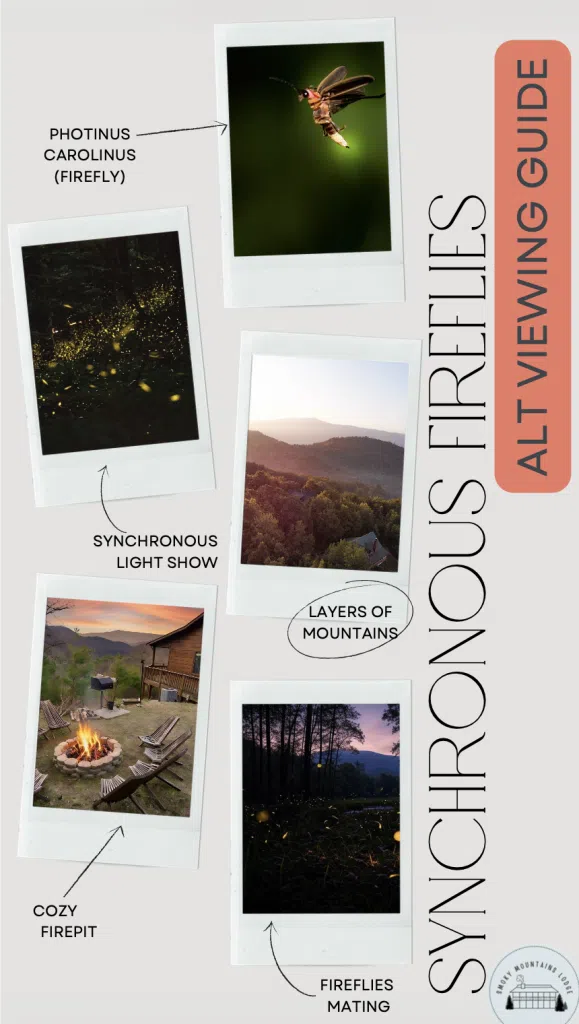
Unlike the common fireflies you might see in your backyard, Photinus carolinus — the synchronous firefly species found in the Smokies — is one of only a handful of firefly species in the world capable of synchronizing their flashes. Males flash in distinctive patterns while females respond from the underbrush, and over time the entire forest pulses with light in eerie, beautiful unison. This phenomenon lasts only a couple of weeks each year, making it one of the most sought-after natural events in the eastern United States.
Still looking for the perfect family cabin in the Smoky Mountains?
Game room equipped with ping pong, foosball, and pool
Spacious Game room and movie space
Open living room
Dedicated movie space + Popcorn machine!
Battle on the arcade games
Dining room + Kitchen island
Upstairs king master bedroom with mountain views
2nd upstairs king bedroom with views of the mountains
Downstairs queen bedroom and Roku TV
2 twin bunk beds in the open game room
Jacuzzi off the 2nd king bedroom
Newly remodeled kitchen + island
Driveway at dawn
Access to the community pool
Tips for the Best Viewing Experience:
A little preparation goes a long way when it comes to seeing the fireflies at their best. Here are some practical tips to make the most of your 2026 visit:
Arrive early. Even with a vehicle pass, parking areas fill up fast. Plan to arrive well before dark so you can find your spot and settle in before the show begins around 9:30 PM.
Choose a moonless night. The fireflies are most visible on nights with little to no moonlight. Check the lunar calendar when selecting your lottery dates — a new moon phase will give you the darkest skies.
Dress for the weather. Nights in the Smokies can be cool and damp even in late May and early June. Bring layers, comfortable walking shoes, and bug spray.
Be patient. The fireflies don’t start flashing immediately after dark. There’s often a quiet period before the synchrony builds — stick around and you’ll be rewarded.
Bring a red-filtered flashlight or headlamp. White light disrupts the fireflies’ mating behavior. Red light is far less intrusive and still allows you to navigate the trails safely.
Download the NPS app or check road conditions ahead of time. Cell service is limited in the park, so download offline maps and check for any trail closures before you head out.
Viewing Ethics:
The synchronous firefly event is a fragile natural phenomenon that depends on a healthy, undisturbed ecosystem. Please be a responsible visitor so future generations can enjoy this experience too.
Minimize use of your car headlights as soon as you’re close to viewing areas
Use a red-filtered flashlight or headlamp (instead of white light)
Never shine white lights at or near the fireflies — it disrupts mating and can scatter the entire display
Stay off the grass and vegetation along the trail edges where fireflies perch
Alternatives for Viewing Synchronous Fireflies in 2026:
Didn’t win the highly competitive Elkmont lottery? Don’t let that keep you from the magic of the Smokies. The truth is, synchronous fireflies don’t strictly obey National Park boundaries. As long as you understand the “Goldilocks” elevation and know where the right water sources are, there are several hidden corridors where you can witness the phenomenon far away from the lottery crowds.
We want our guests to have the ultimate advantage. That’s why we’ve compiled our hyper-local, closely guarded secrets into the Insider’s Firefly Viewing Guide.
In this exclusive, downloadable PDF guide, we reveal our private list of alternative viewing locations, including:
The Scenic Valley Loop: An easily accessible, open valley with designated pull-offs perfect for a quiet, early evening viewing.
The Dense Forest Drive: A picturesque, hidden-gem motor trail that transforms into a spectacular light show if you know exactly which overlooks to utilize.
The Ancient Forest Escape: A spectacular, centuries-old forest just over the NC border that most Smoky Mountain tourists completely overlook.
The Private Reserve: A lesser-known, highly uncrowded viewing area just outside the main tourist hubs—perfect if you want a guaranteed, stress-free experience.
Hidden Creekside Trails: The Gatlinburg-area trailheads that run near streams and consistently yield the best “off-the-beaten-path” sightings.
Enter your email below to get our exclusive alternative viewing guide
Frequently Asked Questions About the 2026 Synchronous Firefly Event:
Is it free to enter the lottery? No — there is a $1 non-refundable application fee per lottery entry. If you win, vehicle passes are $24 each.
How many passes are available? The number of vehicle passes varies each year based on park capacity decisions, but spots are extremely limited. Historically only a small percentage of applicants win.
Can I walk in without a pass? The road to Elkmont is closed to general vehicle traffic during the event. However, guests staying at Elkmont Campground are able to access the viewing area without a lottery pass, making campsite reservations at Elkmont a popular (and competitive) alternative.
What if I miss the lottery entirely? Try one of the alternative viewing locations listed above, or consider visiting the park in the days just before or just after the peak event window — the fireflies don’t disappear overnight, and the crowds are far thinner outside of the official lottery viewing period.
Witnessing the synchronous fireflies in the Smoky Mountains is a truly magical experience — one that should be on every nature lover’s bucket list. Whether you’re fortunate enough to secure a 2026 lottery pass for Elkmont or explore one of the many alternative viewing spots, be sure to respect the park’s guidelines and take a moment to fully absorb the wonder of this rare natural spectacle. With the right planning and a little luck, you’ll come away with memories that last a lifetime among the twinkling lights of these remarkable insects.
Book Now: This goes to our secure portal to review your info and confirm booking.
Send Inquiry: If you’re not quite ready to book, you can send an inquiry with any questions.
The Great Smoky Mountains National Park offers a wide range of beautiful nature hikes with stunning scenery and diverse wildlife.
Parking pass for the Park
There is no entrance fee for the Smoky Mountains National Park, however, as of March 2023, you will need to purchase a parking pass if you plan to park anywhere inside the park. You can get a daily ($5), weekly ($15), or annual ($40) parking pass. They can either be purchased online and printed or purchased in-person:
Here are some of the best nature hikes you can explore in the Smoky Mountains:
1. Abrams Falls Trail (medium): This 5-mile round trip hike takes you to Abrams Falls, a picturesque 20-foot waterfall. The trail offers scenic views of the forest and crosses over Abrams Creek. It’s conveniently located right off the Cades Cove scenic loop.
2. Cataract Falls (easy): Hiking Cataract Falls in the Smoky Mountains offers a scenic adventure through lush forests and alongside cascading waterfalls. The trailhead starts just behind the Sugarlands Visitors Center, a couple miles inside the park from Gatlinburg. The trail spans approximately 2.6 miles round trip with a moderate elevation gain of 400 feet, making it accessible for hikers of various skill levels. Along the way, hikers are treated to stunning views of the falls as they tumble gracefully over rocky ledges, providing a refreshing and rejuvenating experience amidst the tranquil beauty of the mountains.
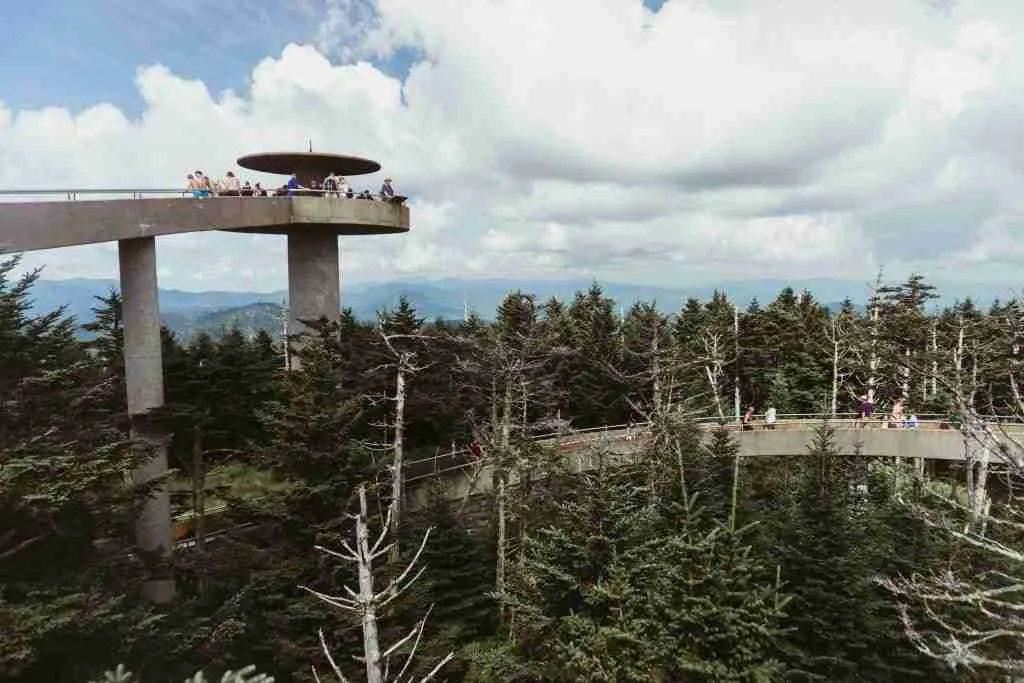
3.Kuwohi, formerly Clingman’s Dome (easy): This isn’t much of a hike, in fact you just drive up the road and walk up 0.5 miles up the paved, but steep walkway to the observation deck. At 6,643 feet, this is the highest point in Tennessee, and on clear days you can expect to see 100 miles in any.
4. Cave Trail (medium): This 4.4-mile round trip hike is one of the most popular in the park. It takes you through an arch rock formation, past Alum Cave Bluffs, and offers stunning vistas along the way.
5. Rainbow Falls Trail (medium): This 5.4-mile round trip hike leads to Rainbow Falls, a majestic 80-foot waterfall. The trail has about 2,000 feet of elevation gain and is known for its colorful wildflowers and the possibility of seeing a rainbow in the mist of the falls.
6. Mount LeConte via the Alum Cave Trail (hard): This challenging 10-mile round trip and 3,000 ft elevation gain hike takes you to the summit of Mount LeConte, the third-highest peak in the park. This is one of the most popular trails in the park, so start early. Check out LeConte Lodge cabins while you’re there. Along the way, you’ll encounter unique geological features and enjoy sweeping views from the mountaintop.
7. Spruce Flats Falls (easy): This 1.6-mile out and back is one of the most underrated falls hikes in the Smokys. The journey to Spruce Flats Falls takes you through lush, dense forests filled with towering trees and diverse flora. The well-maintained trail follows the course of the Middle Prong of the Little River, creating a serene atmosphere as the sound of flowing water accompanies you throughout the hike. Along the way, hikers may encounter vibrant wildflowers, moss-covered rocks, and the occasional wildlife, adding to the natural charm of the surroundings.
Upon reaching Spruce Flats Falls, visitors are greeted by the sight and sound of a mesmerizing 30-foot waterfall cascading over layered rocks into a tranquil pool below. The falls are surrounded by a scenic amphitheater of moss-covered boulders, creating an ideal spot for a restful break or a peaceful picnic.
8. Laurel Falls Trail (easy): This 2.6-mile round trip and 500 ft elevation gain of paved trail leads to Laurel Falls, a beautiful 80-foot waterfall. It’s a relatively easy hike and is suitable for all skill levels.
Still looking for the perfect family cabin in the Smoky Mountains?
Game room equipped with ping pong, foosball, and pool
Spacious Game room and movie space
Open living room
Dedicated movie space + Popcorn machine!
Battle on the arcade games
Dining room + Kitchen island
Upstairs king master bedroom with mountain views
2nd upstairs king bedroom with views of the mountains
Downstairs queen bedroom and Roku TV
2 twin bunk beds in the open game room
Jacuzzi off the 2nd king bedroom
Newly remodeled kitchen + island
Driveway at dawn
Access to the community pool
9. Cades Cove Nature Trail(very easy): This 0.8-mile loop trail offers a leisurely stroll through the historic Cades Cove valley. It provides opportunities for wildlife spotting and features beautiful meadows and mountain views.
10. Little River Trail (easy): This 4.9 mile (up to 7.6 miles) hike is popular amongst families and kids. This trail offers a leisurely stroll along an old logging road, providing a tranquil escape into nature suitable for hikers of all abilities. Beginning at the trailhead near Elkmont Campground, the path winds alongside the picturesque Little River, revealing remnants of the area’s logging history, such as railroad rails and steel cables from the early 1900s. While there isn’t a specific endpoint like a waterfall or viewpoint, hikers have the flexibility to tailor the hike’s length according to their preferences. Springtime brings vibrant wildflowers, while autumn showcases the fiery foliage, making it an ideal destination year-round. Furthermore, the trail’s connection to the Elkmont area offers a unique opportunity to witness the mesmerizing display of synchronous fireflies during early summer nights.
11. Grotto Falls Trail (easy): This 2.6-mile round trip hike and 550 ft elevation gain takes you to Grotto Falls, the only waterfall in the park that you can walk behind. This trail is extremely popular so START EARLY, otherwise parking might be difficult. The trail is known for its lush vegetation and is particularly beautiful in the spring.
12. Ramsey Cascades Trail (hard): This strenuous (2,200 ft elevation gain) 8-mile round-trip hike leads to Ramsey Cascades, the tallest waterfall in the park, with a 100-foot drop. This is one of the most popular and best nature hikes in the Smoky Mountains. The trail passes through old-growth forests and offers a challenging but rewarding experience.
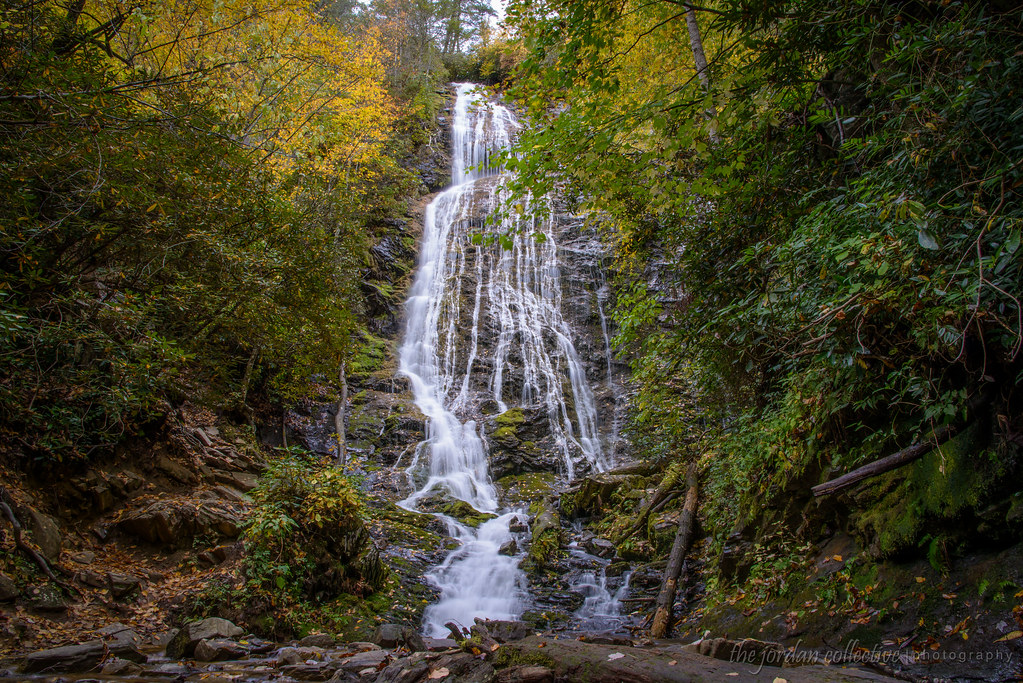
13. Mingo Falls (medium): This stunning waterfall located in on the North Carolina side near Cherokee, North Carolina. The hike is 0.4 miles in and is well-maintained, offering a relatively easy trek for those who wish to enjoy the beauty of the waterfall and its picturesque surroundings. The waterfall itself stands at approximately 120 feet (37 meters) tall, making it one of the tallest waterfalls in the southern Appalachians. The falls are surrounded by lush greenery and are accessible via a relatively short hike, providing visitors with a rewarding natural spectacle.
14. Andrews Bald (medium): This 3.6-mile round trip hike takes you to a grassy bald atop the Great Smoky Mountains. It offers stunning panoramic views of the surrounding mountains and is especially popular during the peak wildflower season.
15. Charlies Bunion (hard): This 8-mile round trip hike follows the Appalachian Trail to a rocky outcrop known as Charlies Bunion. From there, you can enjoy breathtaking panoramic views of the surrounding mountains.
16. Deep Creek (hard): This trail is known for its scenic beauty and diverse features. It’s a popular trail in the park, showcasing waterfalls, lush forests, and the soothing sounds of Deep Creek. The hike is moderate in difficulty and covers about 5.4 miles one-way to reach the popular Juney Whank Falls. Hikers can enjoy the serenity of the forest, cross footbridges, and experience the cascading waterfalls along the way, such as Tom Branch and Indian Creek waterfalls.
Remember to check with the park authorities or visitor center for trail conditions and any specific guidelines or restrictions before embarking on your hike. Enjoy exploring the beauty of the Smoky Mountains!
Book Now: This goes to our secure portal to review your info and confirm booking.
Send Inquiry: If you’re not quite ready to book, you can send an inquiry with any questions.
What are the best nature hikes according to you in Smoky Mountains? Which of the above hikes would you do again and again? Add your comments below!
Enjoying Summer Fun: River Floating in the Smoky Mountains
The Smoky Mountains offer a plethora of outdoor activities, but one of the best ways to beat the summer heat is to float down the river. Whether you’re renting a tube for a leisurely float with your crew or opting for a guided rafting adventure, river floating in the Smoky Mountains is an unforgettable experience. This activity not only keeps you cool but also lets you enjoy the water and create magical memories with your family.
River Tubing in the Great Smoky Mountains
One popular option for river floating is river tubing in the Great Smoky Mountains. River Rat Tubing is a fantastic way to spend a lazy afternoon. As of 2024, rates are $22/adult and $17/youth. Imagine drifting along in a comfortable tube, surrounded by the breathtaking scenery of the Smokies. The gentle current carries you downstream, providing a relaxing yet exhilarating experience.
River Rat outpost in Townsend, TN
River Floating Near Pigeon Forge and Gatlinburg
For those staying near Pigeon Forge or Gatlinburg, river floating is easily accessible. Many outfitters offer rental services and shuttle transportation to and from the river, making it a hassle-free adventure. River floating near Gatlinburg, TN, is particularly popular, thanks to the proximity of the Little Pigeon River. This river runs through the heart of the Smoky Mountains and offers various spots perfect for floating.
Guided River Rafting Adventures
If you’re looking for a bit more excitement, consider a guided river rafting adventure. Professional guides ensure your safety while you navigate the river’s rapids. There are sections of rivers that are suitable for most all ages, although this option tends to be better for families with older children or groups of friends seeking a thrilling experience. River rafting combines the tranquility of floating with the adrenaline rush of navigating rapids, making it a versatile activity for all ages.
Current River Floating Conditions
Before you head out, it’s essential to check the current river floating conditions. Local outfitters and park services regularly update this information, ensuring you have a safe and enjoyable experience. Knowing the water levels and flow rates can help you plan your trip more effectively, whether you’re tubing or rafting.
Game room equipped with ping pong, foosball, and pool
Spacious Game room and movie space
Open living room
Dedicated movie space + Popcorn machine!
Battle on the arcade games
Dining room + Kitchen island
Upstairs king master bedroom with mountain views
2nd upstairs king bedroom with views of the mountains
Downstairs queen bedroom and Roku TV
2 twin bunk beds in the open game room
Jacuzzi off the 2nd king bedroom
Newly remodeled kitchen + island
Driveway at dawn
Access to the community pool
What River Runs Through the Smoky Mountains?
The primary river running through the Smoky Mountains is the Little Pigeon River. This river is a favorite for many outdoor enthusiasts due to its accessibility and the variety of floating experiences it offers. From calm stretches perfect for tubing to sections with mild rapids ideal for rafting, the Little Pigeon River caters to everyone. There are also plenty of fishing holes in the area, so be sure to check out our ultimate fishing guide for the Smokys.
River Floating in Gatlinburg: A Must-Do Activity
River floating in Gatlinburg is a must-do summer activity. With various rental shops and guided tours available, it’s easy to find an option that suits your preferences. Whether you’re a seasoned rafter or a first-time tuber, the rivers in and around Gatlinburg provide the perfect backdrop for a memorable adventure.
Recommended Outfitters and Guides
Here are some recommended outfitters and guides to help you plan your river floating adventure in the Smoky Mountains:
Although the Smoky Mountains are the primary attraction, river floating near Chattanooga is also very popular and worth exploring. The Ocoee River, just a short drive away, offers both tubing and rafting options. Known for its challenging rapids, the Ocoee River is ideal for those looking for a more adventurous experience.
In conclusion, river floating in the Smoky Mountains is an excellent way to stay cool, enjoy the water, and create lasting memories with your family. From river tubing in the Great Smoky Mountains to guided rafting adventures and floating near Pigeon Forge and Gatlinburg, there’s something for everyone. So, grab a tube or a raft, and get ready for an unforgettable summer adventure in the Smokies!
What other river adventures have you tried? What company would you recommend? We want to hear from you!
Nestled between North Carolina and Tennessee, the Great Smoky Mountains National Park offers breathtaking vistas, diverse wildlife, and a myriad of outdoor adventures. Among these adventures, exploring the rugged terrain via ATVs, RZRs (side-by-sides), or Jeeps provides an exhilarating experience for outdoor enthusiasts. In this guide, we’ll delve into the ins and outs of renting these vehicles in the Smoky Mountains, along with the best trails to explore and important regulations to be aware of.
Renting ATVs in the Smoky Mountains
ATVs, or all-terrain vehicles, are popular choices for traversing the diverse landscape of the Smoky Mountains. Many rental companies in the area offer a range of ATV tours suitable for all skill levels.
While exploring the Smoky Mountains on ATVs can be an exhilarating experience, it’s important to adhere to park regulations and guidelines. In general, ATVs are not permitted on paved roads, because they are not street legal. However, there are designated trails and gravel or dirt roads where ATV use is allowed. Additionally, all riders are required to wear helmets and follow safe riding practices to minimize environmental impact and ensure personal safety.
ExoRent Website: https://exorent-utv-rental.com Phone: (865) 314-7368 Address: 181 E Wears Valley Rd, Pigeon Forge, TN 37863
Jayell Ranch: This is more of a destination where you can go for guided trips at their family adventure park Website: https://jayellranch.com/adventures/atv-utv-off-road-adventures Phone: (865) 776-1593 Address: 1131 Jayell Road, Sevierville, TN 37862
Best Trails for ATVs: The Smoky Mountains area boasts an good network of trails catering to ATV enthusiasts. Here are some of the top trails to explore:
Cades Cove: Known for its scenic beauty and historic sites, Cades Cove offers a 11-mile loop road that is open to motor vehicles, including ATVs. Visitors can enjoy panoramic views of the surrounding mountains and abundant wildlife sightings. If you’re driving Cades Cove, see our Ultimate Historical Guide to Cades Cove Loop, including our exclusive Driving Tour Audio Guide companion.
Rich Mountain Road: This gravel road winds through the heart of the Great Smoky Mountains National Park, offering stunning vistas of the surrounding forests and valleys. It’s an ideal route for ATV enthusiasts looking for a scenic drive.
Pittman Center Road: Pittman Center Road provides access to a network of gravel roads and trails that are open to ATVs. Visitors can explore secluded forests and picturesque streams along this route.
Renting RZRs (Side-by-Sides) in the Smoky Mountains
RZRs, or side-by-sides, are another popular option for exploring the rugged terrain of the Smoky Mountains. These vehicles offer enhanced stability and seating for multiple passengers, making them ideal for group adventures. Most rental shops in the area have street-legal UTVs, and these are allowed on roads in the Smoky Mountain area, including within the national park on Cades Cove, Rich Mountain, Tremont, Townsend, Foothills Parkway, Elkmont, and the town of Gatlinburg.
Here are a few rental companies offering RZR rentals:
Adventure Off Road Park and Nature Center Website: www.adventureoffroadpark.com Phone: (423) 625-3643 Address: 1040 Ellis Cove Rd, South Pittsburg, TN 37380
Renting Jeeps in the Smoky Mountains
Renting Jeeps in the Smoky Mountains provides another exciting way to explore the great outdoors. With their off-road capabilities and open-air design, Jeeps offer an immersive experience amidst the natural beauty of the region. Also keep in mind that in August, there’s a Jeep Invasion, so there make sure to reserve a Jeep early during that time. Click here for more events throughout the year.
Here are some rental companies offering Jeep rentals:
Wears Valley Jeep Rental Website: www.wearsvalleyjeeprentals.com Phone: (865) 366-6487 Address: 3770 Wears Valley Rd, Sevierville, TN 37862
Game room equipped with ping pong, foosball, and pool
Spacious Game room and movie space
Open living room
Dedicated movie space + Popcorn machine!
Battle on the arcade games
Dining room + Kitchen island
Upstairs king master bedroom with mountain views
2nd upstairs king bedroom with views of the mountains
Downstairs queen bedroom and Roku TV
2 twin bunk beds in the open game room
Jacuzzi off the 2nd king bedroom
Newly remodeled kitchen + island
Driveway at dawn
Access to the community pool
Best Trails for ATVs, UTVs, and Jeeps:
Whether you’re driving UTVs or a Jeep, you will find a plethora of scenic trails to explore in the Smoky Mountains. ATVs are not street-legal, so there are more limited options for ATVs. Here are some must-visit roads and trails:
Foothills Parkway (pictured): Stretching over 30 miles along the northern border of the Great Smoky Mountains National Park, Foothills Parkway offers sweeping vistas of the surrounding mountains and valleys. Jeep enthusiasts can enjoy panoramic views and abundant wildlife sightings while cruising along this scenic byway.
Windrock Park: With over 300 miles of trails ranging from easy to challenging, Windrock Park is a paradise for RZR enthusiasts. Visitors can enjoy scenic overlooks, rock crawling, and creek crossings amidst the stunning backdrop of the Appalachian Mountains.
Royal Blue Wildlife Management Area: This expansive area features over 600 miles of trails winding through forests, mountains, and valleys. RZR enthusiasts can explore rugged terrain and enjoy breathtaking views of the surrounding landscape.
Coal Creek OHV Area: Located near Oliver Springs, Coal Creek OHV Area offers over 160 miles of trails suitable for RZRs and ATVs. Visitors can traverse rocky hillsides, splash through streams, and experience the natural beauty of the Smoky Mountains.
Roaring Fork Motor Nature Trail: The road is a looped 5.5-mile-long, one-way, loop road and a favorite trip for many. It’s a narrow and winding road but offers stunning views of waterfalls, old-growth forests, and historic homesteads. Visitors can experience the beauty of the Smoky Mountains up close while navigating this picturesque route.
Upper Tremont Road: Upper Tremont Road winds through lush forests and alongside rushing mountain streams, providing a peaceful escape from the hustle and bustle of city life. Jeep enthusiasts can enjoy birdwatching, picnicking, and photography along this scenic route.
Conclusion: Whether you are renting Jeeps in the Smoky Mountains, ATVs or RZRs, each option provides an exciting opportunity to explore the natural beauty of the outdoors. Whether you’re seeking adrenaline-pumping off-road adventures or leisurely scenic drives, there’s something for everyone to enjoy in this picturesque region. By adhering to park regulations, practicing responsible riding/driving, and respecting the environment, visitors can make the most of their outdoor adventures in the Smoky Mountains.